
Talk to a bath specialistFree · No obligation
(833) 334-4470
Santa Maria is the largest city in northern Santa Barbara County, in the Santa Maria Valley, with about 145,655 people in its service area.
The city is a working farm town and a wine-country gateway at once. Vineyards roll across the valley floor, strawberries and vegetables fill the fields, and Santa Maria-style barbecue — tri-tip over red oak — is a point of local pride.
Allan Hancock College anchors the east side of town, and Vandenberg Space Force Base sits to the southwest, bringing military families and steady demand for family-sized homes.
Coastal fog rolls in most mornings and keeps summers mild, while the Guadalupe-Nipomo Dunes stretch along the shore west of town. Winters stay gentle, and the marine layer shapes how a bathroom should breathe.
Being Sauna connects Santa Maria homeowners with vetted local wet-area specialists: honest planning ranges up front, a free in-home assessment, and a written quote with no pressure to sign on the day.
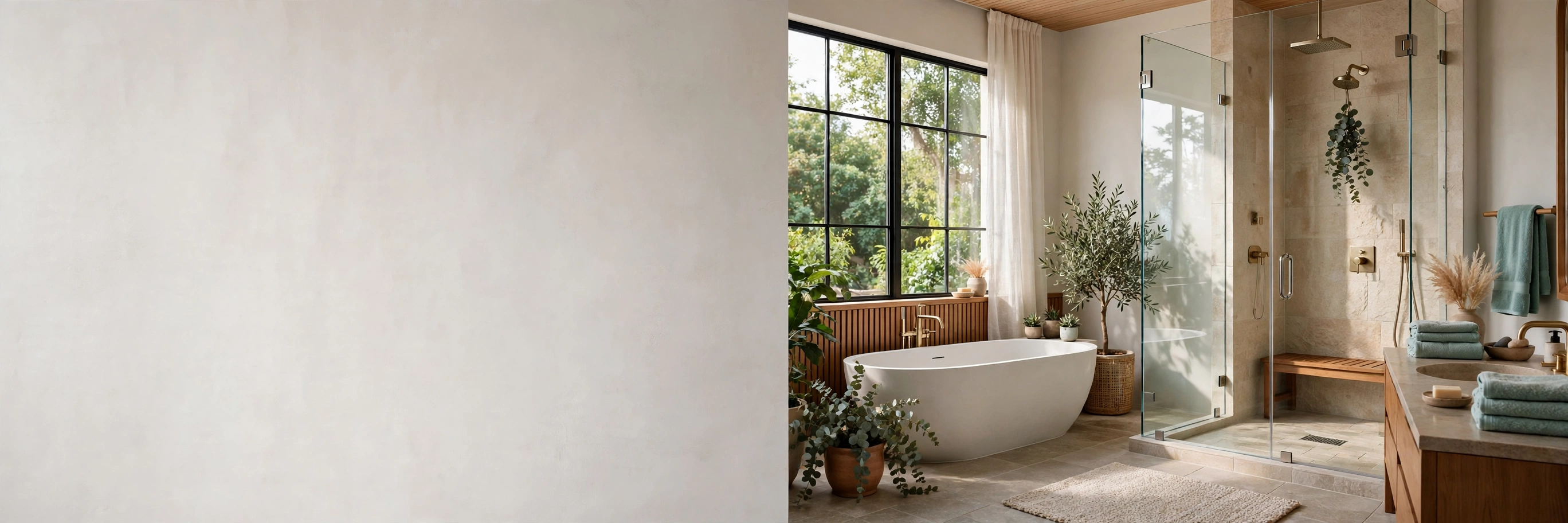
In short: Bathroom remodeling in Santa Maria, CA centers on the wet area: tub-to-shower conversions ($8,500–$17,000), shower replacement ($7,500–$15,000), walk-in showers ($9,000–$18,000), and tub replacement ($6,500–$13,000), installed by vetted local specialists.
Hard groundwater, ranch-era plumbing, and foggy mornings make the free in-home assessment especially valuable: pan, valve, drain, ventilation, and subfloor are checked before you sign. Call (833) 334-4470.
Six services, one specialty — the tub and shower. Each links to its full guide with costs and process.
The change Santa Maria households ask for most swaps a rarely used tub for a low-entry shower. In a ranch home built for a big family, one quick, safe shower often serves the household better than a tub nobody fills.
For showers worn down by hard groundwater and daily use: scale on fixtures, tired grout, and valves that no longer hold temperature steady. A full renewal fixes the parts you cannot see, not just the walls.
For staying in the Santa Maria home you already love — a low-entry shower with a bench, anchored grab bars, and seated controls that work for every generation in the house, from grandparents to grandchildren.
Many Santa Maria households still want a real tub — for grandchildren visiting from across the valley, for a long soak on a cool foggy evening, or for a home where one full bath must serve everyone.
Bought a shower-only home and then grandchildren or visiting family started staying over, and the house suddenly needs a bath again? Bring the tub back as a proper tub-shower combination.
Whole-room reworks for ranch baths untouched for decades, and for newer subdivision homes whose tub and shower both need renewal at once — one project, one written quote, wet area first.
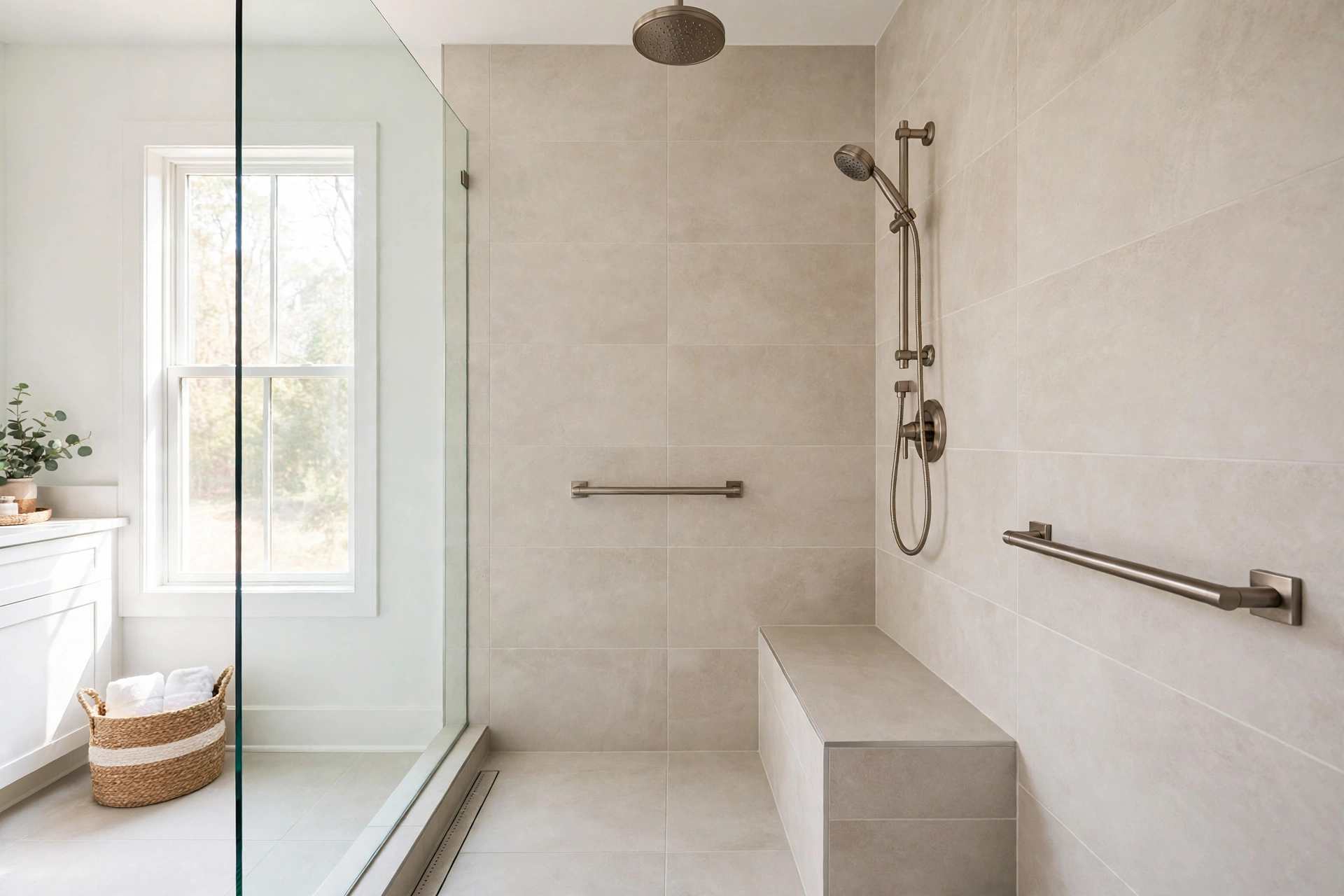
Santa Maria draws on a steady Central Coast contractor market, so most jobs land mid-range. The spread comes from the house, not the ZIP.
A straightforward alcove tub swap is simpler than a ranch home needing original plumbing renewed first, or an older bath with layers of past work to untangle.
The upper half of a range reflects house condition, never a surprise, because it is priced in the written quote before work begins. See the 2026 cost guide for methodology.
| Project | Planning range |
|---|---|
| Tub-to-shower conversion | $8,500 – $17,000 |
| Shower replacement | $7,500 – $15,000 |
| Walk-in shower | $9,000 – $18,000 |
| Bathtub replacement | $6,500 – $13,000 |
| Shower-to-tub conversion | $7,500 – $14,000 |
| Full bathroom remodel | $15,000 – $35,000+ |
Planning ranges based on published national installer pricing (2026), for budgeting guidance — not quotes. One piece of Santa Maria honesty: the quote you compare should cover the pan, the valve and the drain together.
The cheapest number usually leaves a worn valve or a tired drain behind new walls, and the room below pays for it. Full methodology: the 2026 cost guide.
Santa Maria is best understood as a farm city with a wine-country edge: ranch homes from the valley's growth decades, newer subdivisions at the edges, and a coastal climate that never gets extreme.
Most Santa Maria homes date from the 1960s through the 1980s, with ranch layouts, single-story plans, and one or two full baths. Newer subdivisions add larger primary baths and builder-original showers.
A ranch bath is often compact, with original valves and drains behind decades of use. A newer subdivision bath may be larger but dated, with finishes that wore out before the plumbing did.
Santa Maria city homes run on municipal water drawn from local groundwater, and that water runs hard. Scale builds on fixtures, clogs showerheads, and clouds glass over time.
Outlying valley lots may still use a private well or septic system. On those lots, the assessment also checks drain capacity and water pressure before fixtures are picked.
Santa Maria has no harsh season, and that is the point. Marine-layer mornings keep summers mild, fog burns off by afternoon, and winter brings cool nights and occasional rain rather than freezes.
The seasonal test here is moisture, not cold. Foggy mornings and mild days keep bathrooms damp for long stretches, so a fan that truly clears the room matters all year.
The Santa Maria Valley wine trail, the dunes, and the city's barbecue rooms draw visitors year-round, and many homes host family and friends often.
A guest-ready bath with a low-entry shower earns its keep fast in a house like that. A safe step-in, a bench, and a shower that drains well are the real daily test of the room.
Nothing fancy — just four things that let the specialist price your Santa Maria bath correctly on the first visit.
First, know whether the home is a ranch house, a mid-century home, or a newer subdivision home, and whether the bath sits on a main level, an upper floor, or at ground level.
Second, note any damp, staining, mildew, or soft spots around the tub or below it, any mustiness after a shower, and any slow drains or temperature swings.
Third, measure the rough footprint and note whether the room sits over a lower level or a slab, and whether there is a second bath in the home.
Fourth, decide which outcome matters most — a safer step-in shower, a deeper tub for visiting family, or a full-room rework — so the written quote prices the right job first.
One more tip: mention hard water, ranch-era plumbing, a well or septic system, or valley guests at the first call, so fixtures and install-day planning fit real local life.
Our Santa Maria coverage centers on northern Santa Barbara County and ZIPs 93454, 93455, 93456, 93457 and 93458, with specialists working toward Orcutt, Guadalupe, and Lompoc — typical directions:
We publish planning ranges on every page. No “call for price”, no games — you budget before anyone visits.
The price you sign is the price you pay. Quotes are written, itemised and valid beyond the day of the visit — take your time deciding.
Installers are independent local contractors checked for licensing, insurance and wet-area specialisation — including experience with hard groundwater, ranch homes, and newer subdivisions.
The biggest complaint in this industry is the same-day pressure close. Our specialists are instructed the opposite way: measure, explain, quote in writing, and leave the decision to you.
Call (833) 334-4470 or send the assessment form. Tell us the community, the bath, and the home type — that is all the booking needs.
A vetted local specialist measures the room, checks the valves, drain, ventilation and subfloor, and explains the options in plain language. No charge, no obligation.
Most wet-area projects finish in one to three days, with the house left clean and the new shower or tub demonstrated before the crew leaves.
Most wet-area projects in Santa Maria follow the planning ranges on this page: tub-to-shower conversions $8,500–$17,000, shower replacements $7,500–$15,000, walk-in showers $9,000–$18,000, bathtub replacements $6,500–$13,000, shower-to-tub conversions $7,500–$14,000, and full remodels $15,000–$35,000+. Your exact price is confirmed in writing after a free in-home assessment.
Santa Maria is the largest city in northern Santa Barbara County, in the Santa Maria Valley, with about 145,655 people in its service area. It covers ZIP codes 93454, 93455, 93456, 93457, and 93458. Orcutt, Guadalupe, Lompoc, Nipomo, Arroyo Grande, Solvang, Buellton, and Santa Ynez sit nearby.
Santa Maria pairs 1960s–1980s ranch homes with newer subdivisions at the edges of town, so baths age very differently across the city. Ranch baths are often compact, with original valves and drains behind decades of use, while newer subdivision baths may be larger but dated. The assessment checks the pan, valve, drain, ventilation, and subfloor before finishes are picked.
Santa Maria water is groundwater-based and runs hard, so mineral scale dulls fixtures and clouds glass over time, and coastal fog keeps bathrooms damp on many mornings. A remodel here should pair new fixtures with scale-resistant finishes and a fan that truly clears the room, even on a foggy morning.
Santa Maria bathrooms can be remodeled any time of year, since most work happens indoors and the climate stays mild. The long, mild stretch from spring through fall makes scheduling easiest and lets a room air out between steps. Book early if the project must finish before guests arrive or a home goes on the market.
How Being Sauna works (transparency note): Being Sauna is a free homeowner service that connects you with independent, vetted local bathroom remodeling contractors — we do not install bathrooms ourselves.
Our cost figures are planning ranges drawn from published national installer pricing and reviewed for accuracy; see our cost guide methodology. This page was last reviewed in October 2026. Questions: beingsauna@gmail.com or (833) 334-4470.
Free in-home assessment in Santa Maria · No pressure · No obligation
Call (833) 334-4470