
Talk to a bath specialistFree · No obligation
(833) 334-4470
Franklin — about 34,647 people across its wider service area in the 46131 ZIP — is the Johnson County seat, a courthouse-square town on the US-31 corridor south of Indianapolis that has kept its downtown intact while the subdivisions spread north toward Greenwood. The city was platted in the 1820s around the courthouse square, Franklin College has anchored the east side since 1834, and the streets around the square still carry early-1900s homes with the small original bathrooms of their era. That history is the whole bathroom story here. Original baths near the square are compact, with plaster walls and cast-iron tubs that have served for generations; the mid-century ranches in between add one-piece showers whose valves and drains are now tired; and the newer subdivisions along US-31 add family homes whose builder-grade tubs and showers are ageing out together. Being Sauna connects Franklin homeowners with vetted local wet-area specialists: honest cost ranges published up front, a free in-home assessment that measures your bathroom instead of quoting a town average, and a written quote that never pressures you to sign today.
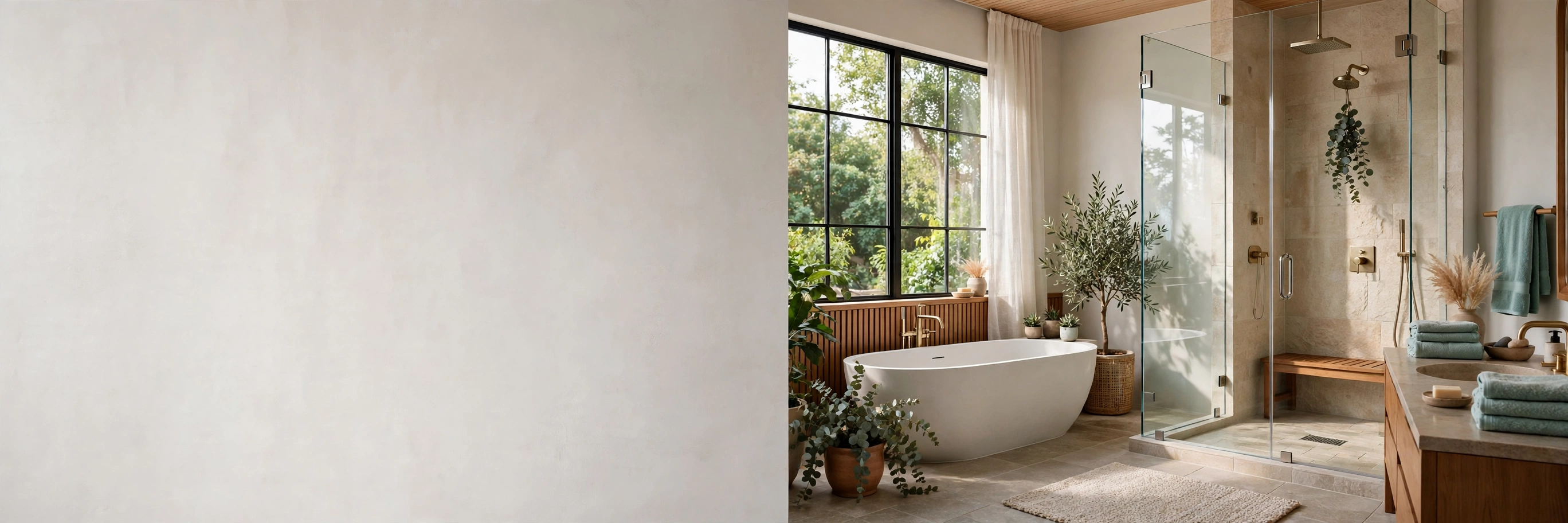
In short: Bathroom remodeling in Franklin, IN focuses on the wet area: tub-to-shower conversions ($8,500–$17,000), shower replacement ($7,500–$15,000), walk-in showers ($9,000–$18,000) and tub replacement ($6,500–$13,000), installed by vetted local specialists. Franklin housing — early-1900s courthouse-square homes with small original baths, plaster walls and cast-iron tubs, mid-century ranches, and newer US-31 corridor subdivisions — plus hard well water on the rural edge, humid summers and freeze-thaw winters makes the free in-home assessment especially valuable: pan, valve, drain, water pressure and subfloor conditions are checked before you sign anything. Call (833) 334-4470.
Six services, one specialty — the tub and shower. Each links to its full guide with costs and process; the ranges below are what Franklin homeowners actually budget against.
The aging-in-place move and the seller move in one: the step-over cast-iron tub in a courthouse-square home, or the stained fibreglass tub in a US-31 subdivision house headed for the market, replaced by a low-step walk-in shower with sealed walls in the same alcove — without losing the character of the room around it.
For the one-piece units and tiled showers the mid-century and subdivision eras finished with — seams gone, valves worn, drains tired, and hard well water working on every fitting. Pan, valve and walls replaced together so the wear stops at the source, not at the surface.
Aging in place in the square-area or ranch home you have lived in for decades — low-entry showers with a bench, properly anchored grab bars and controls you can reach seated, built for the people staying put in Franklin, not showroom photographs. Blocking goes into real structure behind the plaster, not into hope.
Families in the US-31 subdivisions still need real tubs for kids, and square-area families replacing a chipped cast-iron original want the same deep soak without the same weight. Deeper modern replacements with fresh plumbing and surround, usually inside two days.
Bought a shower-only home near Franklin College and then the grandchildren started visiting, or the family outgrew the single shower? Bring the bath back as a proper tub-shower combo, plumbed and sealed right for a house that will hold it for decades.
Square-area bath reworks and whole-room updates across the US-31 subdivisions — one project, one written quote, wet area first, and the home's courthouse-town character respected throughout.
Franklin runs on the south-Indianapolis contractor market — deep enough that most jobs land in the middle of these ranges, with crews travelling the US-31 corridor year-round. The spread comes from the house, not the ZIP: a single-level subdivision home with a straightforward alcove tub is a simpler job than a square-area home whose cast-iron tub has to be broken out of a small bath, or a rural-edge home whose well-water lines need renewal before a modern shower valve goes in. Homes in the college and corridor subdivisions also tend to choose mid-grade wall systems and fixtures, which keeps finished jobs near the middle of the ranges — a choice, not a surprise, because it is priced in the written quote.
| Project | Planning range |
|---|---|
| Tub-to-shower conversion | $8,500 – $17,000 |
| Shower replacement | $7,500 – $15,000 |
| Walk-in shower | $9,000 – $18,000 |
| Bathtub replacement | $6,500 – $13,000 |
| Shower-to-tub conversion | $7,500 – $14,000 |
| Full bathroom remodel | $15,000 – $35,000+ |
Planning ranges based on published national installer pricing (2026), for budgeting guidance — not quotes. Square-area owners deserve their own honesty: the quote you compare should cover the pan, the valve and the drain together — the cheapest number usually leaves a worn valve or a tired drain behind new tile, and the room below pays for it. Sellers: a wet-area conversion photographs better than any other single room update. Full methodology: the 2026 cost guide.
Franklin is a county-seat town that never had to invent a centre — it kept the one it was platted around. The Johnson County Courthouse anchors the square, the downtown streets around it carry the shops and restaurants that give Franklin its walkable core, and Franklin College, founded in 1834, gives the east side its campus edge and its steady stream of rentals. The result is one of the most intact small downtowns on the south side of Indianapolis: a place where long-time residents, college families and corridor commuters live within a few miles of each other, and where the housing market runs from square-area Victorians to brand-new subdivisions without ever leaving the same school district conversation.
The housing runs square to subdivision in distinct bands. The square area came first: early-1900s homes with compact original baths, plaster walls, cast-iron tubs and plumbing that has served for generations, often in houses where the bathroom is the smallest room and the door swing is the biggest problem. Then the mid-century ranches on the streets between the square and the corridor: single-level family homes with one-piece shower units and valves that have now served for decades. Then the newer subdivisions along US-31 toward Greenwood: winding streets, family homes, and bathrooms finished with the builder-grade fibreglass tubs and showers of their decade — fixtures that are now staining, cracking and ageing out together. Beyond the subdivisions, the rural edge adds farmhouses and acreage homes on well water and septic, where the plumbing conversation starts with pressure and drainage rather than fixtures.
Four Franklin conditions shape every wet-area project. First, the small square-area bath: the assessment measures drain location, door swing and blocking before promising a walk-in shower, because in these rooms the plan has to fit the room rather than the catalogue — and grab bars need real blocking behind older plaster, not a guess. Second, the cast-iron tub: removal is planned as a break-out in place, with floors and plaster protected along the way, and the quote prices that labour honestly. Third, the water: hard well water on the rural edge scales valves and showerheads, and older lines narrow with age, so pressure and pipe condition are tested at the assessment rather than discovered behind open walls. Fourth, the climate: humid Indiana summers and hard freeze-thaw winters punish bad seals, so the shower pan, wall seals and ventilation are treated as the job itself, not the finishing touch.
That is why the assessment measures your bathroom instead of quoting a town average — in Franklin, the average is the least reliable number there is. The right plan for a courthouse-square home with a cast-iron tub in a small bath, the right plan for a rural-edge farmhouse on well water and septic, and the right plan for a corridor subdivision family home with a cracked fibreglass tub share almost nothing except the phone number you call to start. Square-area owners: mention original tile, woodwork or fixtures you want kept, and the specialist plans the job around them. A wet area rebuilt for Franklin's square homes, ranches and subdivisions is not a bigger job; it is simply a job measured first.
Our Franklin coverage centers on Johnson County and ZIP 46131, with specialists travelling the US-31 corridor daily — typical directions:
Coverage centers on Franklin and the 46131 ZIP across Johnson County, with specialists travelling the US-31 corridor toward Greenwood and Indianapolis daily.
We are the only bath service in this niche that publishes planning ranges on every page. No “call for price”, no games — you budget before anyone visits.
The price you sign is the price you pay. Quotes are written, itemised and valid beyond the day of the visit — take your time deciding.
Installers are independent local contractors checked for licensing, insurance and wet-area specialisation before they take a single Being Sauna job — including experience with older plaster, cast-iron removal and well-water plumbing.
The biggest complaint in this industry is the same-day pressure close. Our specialists are instructed the opposite way: measure, explain, quote in writing, leave.
Tell a specialist what's going on with your bathroom — two minutes, no obligation, no script-reading call centre.
A local specialist measures, checks the plumbing and subfloor, and leaves you an exact written quote that doesn't expire when they walk out.
Most wet-area projects finish in one to three days, the work area left clean and old materials hauled away.
Most wet-area projects in Franklin follow national planning ranges: tub-to-shower conversions $8,500–$17,000, shower replacements $7,500–$15,000, walk-in showers $9,000–$18,000, bathtub replacements $6,500–$13,000, shower-to-tub conversions $7,500–$14,000 and full bathroom remodels $15,000–$35,000+, installed. Franklin housing runs from early-1900s homes around the courthouse square to mid-century ranches and newer subdivisions along the US-31 corridor — so most jobs land in the middle of the ranges. The upper half applies where the house demands it: a cast-iron tub that has to be broken out of a small older bath, plaster walls that need careful opening and repair, or a second-story bath over finished rooms below. Your exact price is confirmed in writing after a free in-home assessment.
In most Franklin square-area homes, yes — and the small footprint is exactly why the assessment measures instead of guessing. Original baths in the early-1900s houses around the square are often compact, with the tub against one short wall, plaster walls and a door swing that eats the rest of the room. A low-entry shower in the same alcove usually frees floor space rather than taking it, because the tub wall and the step-over disappear. The assessment checks the real constraints: drain location, whether the floor can take a low-profile pan, door swing, and where grab bars can anchor to real blocking behind older plaster. If the room genuinely cannot take a walk-in shower, the written quote says so and prices the tub replacement that does fit — you are never sold a shower your bathroom cannot hold.
It changes what the assessment checks, and it is often the reason a replacement outlasts a surface fix. Hard well water leaves mineral scale on valves, showerheads and tub surfaces year after year, and on a septic system the shower and tub drains have to keep flowing freely — a slow drain that a city-sewer home might tolerate becomes a real problem here. The assessment tests pressure at the fixture, looks at the condition of the supply lines the walls will expose, and checks drain fall and venting before the new unit goes in, so the finished shower is not fed by tired plumbing or drained by a tired line. In practice most Franklin-area homes keep their main lines and renew only the bathroom runs, but the written quote says exactly which it is before you sign.
For a Franklin rental near campus, durability beats decoration every time. Student bathrooms take harder use than an owner-occupied bath: more showers per day, more hair and soap in the drain, and less patience for a slow drip. The work that holds up is the unglamorous kind — a solid shower pan and sealed walls instead of a grout-heavy tile job that needs re-sealing, a pressure-balanced valve that keeps its temperature when the next room showers, and a tub or shower surface that cleans with a wipe rather than a scrub. A tub-to-shower conversion also suits rentals well, because there is no step-over tub to climb and no chipped enamel to explain at move-out. Tell the specialist the home is a rental at the assessment and the written quote is built around surfaces and fixtures chosen for tenant turnover, not showroom photographs.
For a Franklin seller, the wet area is one of the few rooms where the money shows in the listing photographs. Buyers comparing corridor subdivisions and square-area homes side by side judge bathrooms first, and a stained tub or a tired one-piece shower reads as a project before they ever reach the kitchen. A tub-to-shower conversion or a clean tub replacement, finished and photographed well, removes that objection and lets the rest of the house — the courthouse-square character or the subdivision schools and commute — do the selling. One honest limit: a full remodel rarely returns its full cost at sale, so sellers usually do best with the wet-area conversion alone and a written quote that keeps the scope tight. Mention the sale timeline at the assessment and the work days are scheduled around showings.
How Being Sauna works (transparency note): Being Sauna is a free homeowner service that connects you with independent, vetted local bathroom remodeling contractors — we do not install bathrooms ourselves. Our cost figures are planning ranges drawn from published national installer pricing and reviewed for accuracy; see our cost guide methodology. This page was last reviewed in October 2026. Questions: beingsauna@gmail.com or (833) 334-4470.
Free in-home assessment in Franklin · No pressure · No obligation
Call (833) 334-4470