
Talk to a bath specialistFree · No obligation
(833) 334-4470
Ladoga was laid out in 1836 in Clark Township, a Montgomery County farm town on the US-231 corridor south of Crawfordsville, and it wears its age in the best way: a downtown listed on the National Register of Historic Places, 19th-century brick commercial buildings, and period homes whose front porches have watched a century and a half of Indiana pass by. The housing tells two stories. In town, historic-district homes whose bathrooms arrived as afterthoughts — small retrofitted baths with cast-iron tubs that nobody uses and waste lines from several eras sharing the same walls. Out on the township roads, farmhouses and post-war ranch homes on limestone-country well water that leaves white calcium scale on every fixture, with septic tanks setting the rules for how much water the bathroom can honestly move. Being Sauna connects Ladoga homeowners with vetted local wet-area specialists: honest cost ranges published up front, a free in-home assessment that measures the bathroom, the water and the plumbing you actually have — historic-district period home, farmhouse or ranch — and a written quote with no same-day pressure to sign.
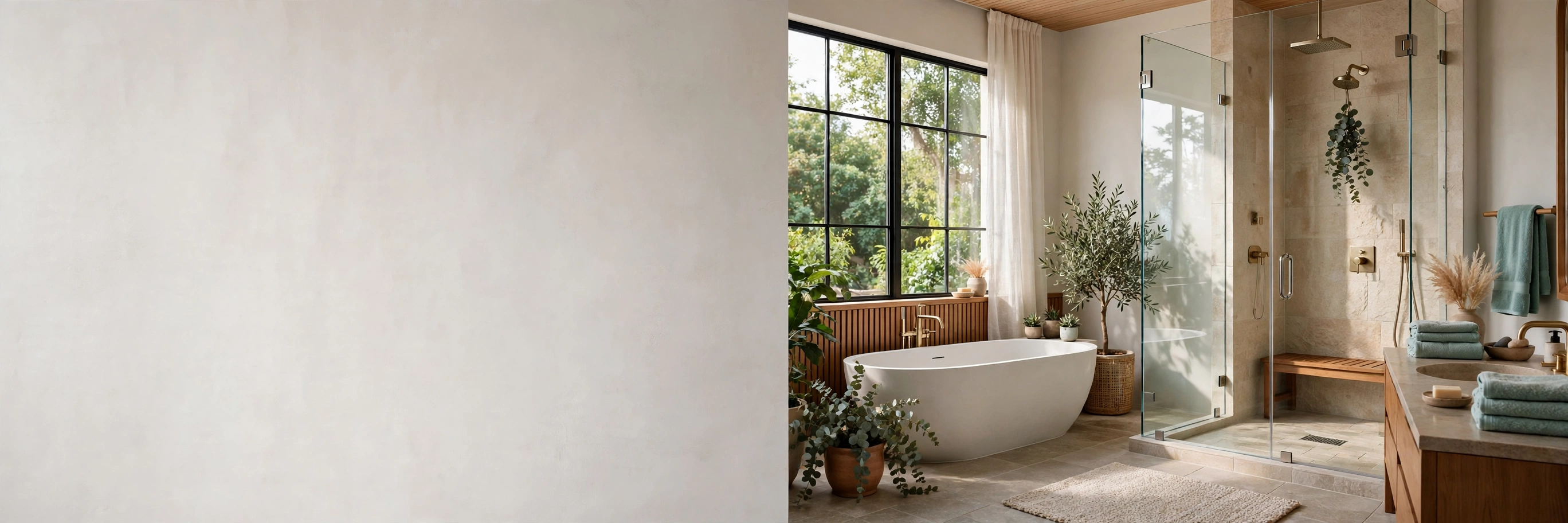
In short: Bathroom remodeling in Ladoga, IN (47954) serves the 1836 farm town in Clark Township, Montgomery County, on the US-231 corridor south of Crawfordsville, plus the township roads around it: tub-to-shower conversions ($8,500–$17,000) for historic-district baths held hostage by unused cast-iron tubs, shower replacements ($7,500–$15,000) for fibreglass units dulled by years of hard limestone water, walk-in showers ($9,000–$18,000) for owners settling in for the long haul, and bathtub replacements ($6,500–$13,000) for growing families. White-scale hard water and septic-aware fixture planning are part of every rural assessment. Being Sauna offers a free in-home assessment with an exact written quote — call (833) 334-4470.
Six services, one specialty — the tub and shower. Each links to its full guide with costs and process; the ranges below are what Montgomery County homeowners actually budget against.
The town workhorse: the unused cast-iron tub out of a historic-district bath, a shower measured to the small room the period house actually has — the conversion that turns Ladoga's tight 19th-century baths into rooms that work.
Fibreglass units crusted and dulled by years of hard limestone well water swapped for sealed solid-surface showers that wipe clean instead of scaling over.
Low-step entries with anchored grab bars and hand-helds on slide bars — chosen by Ladoga families settling in for the long haul in the homes they know.
Worn, scale-marked tubs in the town's older homes replaced with deeper modern tubs and fresh valves — usually finished inside two days.
Bought a shower-only ranch on a township road and then the family grew? Bring the bath back as a proper tub-shower combo, planned around the home's older plumbing.
Whole-room updates across the historic-district homes, the farmhouses and the ranch homes — one project, one written quote, wet area first.
Forget the television numbers that come with the region-wide franchise ads — big promises and same-day pressure closes. The ranges below are the real ones for the 47954 ZIP. What moves a project inside them is Ladoga's two housing layers, and the water both sit on. The first layer is the town: 1836-era homes around the historic downtown whose baths arrived as retrofits — small rooms, old cast-iron tubs, waste lines of mixed vintage that deserve a careful look before a heavier modern shower base goes in. The second layer is the township roads: farmhouses and post-war ranch homes where the rooms are generous and the work is straightforward, but the specification has to reckon with county water — hard limestone wells that leave white calcium scale on every fixture they touch, and septic tanks that set the rules for flow rates and long showers. The free assessment reads the house and the water you actually have — scale-resistant finishes and water softening discussed before installation, never after the first glass door fogs over — before the written quote, never mid-project.
| Project | Planning range |
|---|---|
| Tub-to-shower conversion | $8,500 – $17,000 |
| Shower replacement | $7,500 – $15,000 |
| Walk-in shower | $9,000 – $18,000 |
| Bathtub replacement | $6,500 – $13,000 |
| Shower-to-tub conversion | $7,500 – $14,000 |
| Full bathroom remodeling | $15,000 – $35,000+ |
Planning ranges based on published national installer pricing (2026), for budgeting guidance — not quotes. Ladoga's historic-district homes reward careful waste-line assessment, the township routes reward scale-resistant fixtures and septic-aware planning, and the limestone-country water rewards an honest look at pressure before finishes are chosen — so every remodel is planned with the plumbing, water and drainage in mind, not just a cosmetic refresh. Full methodology: the 2026 cost guide.
Ladoga is one of Montgomery County's oldest settlements, laid out in 1836, and the downtown tells you so at a glance: a National Register historic district of 19th-century brick commercial buildings, with period homes on the surrounding streets built in the same long-ago century. Crawfordsville — the county seat — sits up the US-231 corridor, and that highway is the town's lifeline: it carries the township traffic, the farm trade and the specialists who already run these routes daily. Beyond the town limits, Clark Township opens into the classic west-central Indiana pattern — farmhouses on township roads, post-war ranch homes set back on big lots, and limestone-country wells and septic systems that simply come with the address. The water here is hard in the white-scale sense: calcium filmed on glass and crusting on fixtures, never rust. What all of this means for your bathroom: in the historic district, small retrofitted baths where the unused cast-iron tub is the obvious candidate for conversion, planned around old waste lines and subfloors that deserve an honest look first; on the township routes, scale-resistant finishes, softening conversations and septic-safe flow rates entering every specification; and everywhere, an assessment that measures the house and its water before the price is written.
Our Ladoga coverage centres on the 47954 ZIP and runs through Clark Township and Montgomery County — into Crawfordsville, the county seat, down to Greencastle, and across to Covington and Rockville. Specialists travel these routes daily — typical directions:
Specialists here know what hard limestone water does to a finish, what a septic tank can carry, and how to plan a modern shower inside an 1836-era bathroom without fighting the house.
The written quote you receive in your home stays valid — no expiring-today prices, no call-the-manager theatre. Take the week you need; the number holds.
Installers are independent local contractors vetted for licensing, insurance and wet-area work — including the Ladoga specifics: historic-district waste lines, hard-water scaling, septic-safe flow rates, and small-bath layouts done properly.
The industry's signature move is the same-day pressure close; ours is the opposite. The specialist measures, explains the options, writes the quote, and leaves. That is the whole visit.
Tell a specialist what is going on with your bathroom — a historic-district period-home tub that never gets used, a shower filmed white by hard water, a township-road farmhouse retrofit. Two minutes, no obligation, no call-centre script.
A local specialist measures the room, checks the plumbing, the hard water, the septic context and the subfloor — period home, farmhouse or ranch — and leaves an exact written quote that does not expire on the spot.
Most wet-area projects finish in one to three days; the work area is left clean and the old tub or unit is hauled away.
Ladoga wet-area projects follow the published planning ranges: tub-to-shower conversions $8,500–$17,000, shower replacements $7,500–$15,000, walk-in showers $9,000–$18,000, bathtub replacements $6,500–$13,000, shower-to-tub conversions $7,500–$14,000 and full bathroom remodels $15,000–$35,000+, installed. Where a Ladoga home lands inside those ranges depends on which of the town's two housing layers it belongs to. The town itself is an 1836 farm community with a National Register historic district — period homes whose baths were added decades after the house was framed, with small rooms, cast-iron tubs and old waste lines that deserve an honest look before heavier modern bases go in. The township roads hold farmhouses and post-war ranch homes along the US-231 corridor with generous rooms and straightforward work, but the specification has to reckon with the county's limestone water: hard wells that leave white calcium scale on everything, and septic tanks that set the rules for flow. The free assessment reads the house and the water you actually have before the written quote, never mid-project.
It changes the respect paid to the house, not the quality of the new shower. Downtown Ladoga is a National Register historic district of 19th-century brick commercial buildings and period homes, and many of those homes were standing long before indoor plumbing arrived — their baths were retrofitted into closets, back porches and corners, with cast-iron tubs set on floors never designed for them. A measured tub-to-shower conversion is usually the right move in these rooms, because the unused tub is the thing making a small bath unusable. The honest work is what happens around the swap: older waste lines get inspected before a heavier modern shower base is set, the subfloor under the old tub is checked for the slow leaks cast-iron tubs love to hide, and the finish details are chosen to sit comfortably in a 19th-century room rather than fight it. Wet-area work happens inside the bathroom — nothing here touches the exterior or the character of the district — and the written quote is produced in the house, with the room measured first.
It changes the specification, not the sales pitch. This is limestone country, and across the 47954 ZIP outside the town limits the wells run hard — white calcium scale crusting shower heads, filming glass and spotting every faucet it touches. A specialist who knows the Clark Township roads plans for that water from the first conversation: scale-resistant fixture finishes, solid-surface surrounds that wipe clean instead of pitting, and water softening discussed before anything is ordered rather than after the first glass door fogs over. The assessment also checks what the well and its pressure can genuinely deliver, because a rainfall head means little on a struggling well, and on septic the flow rates stay within what the tank can honestly carry. Mention the scale when you call — the written quote reflects the water the home actually has.
We serve the whole 47954 ZIP and the roads around it. Specialists already run the Montgomery County routes daily — into Crawfordsville, the county seat, up the US-231 corridor to Waynetown, across to New Market and Waveland, and to the farmhouses and post-war ranches on the township roads — with the full free in-home assessment and the same published planning ranges as everywhere else we serve. There is no requirement to drive anywhere for a showroom visit; the written quote is produced in your own home, whether it is a historic-district period home on a Ladoga street or a farmhouse two miles out, with no pressure to decide on the spot.
In Ladoga's older, smaller homes it is the project that most often earns its keep — provided the tub is genuinely unused. The period homes in the historic district were built in an era of smaller footprints, and when an indoor bath was retrofitted, the cast-iron tub claimed the only floor space worth having. A measured conversion turns that dead rectangle into a shower cut to the room: low curb, clear glass, a hand-held on a slide bar — the room suddenly feels twice its size and works better for anyone who plans to age in the house. The honest caveat: if small children are in the picture, some families keep one tub in the house, and a specialist will say so rather than sell the only sensible tub away. The free assessment measures the room, checks the waste lines and the subfloor, and the written quote is built around the house you actually have — never around the idea that every home needs the same answer.
How Being Sauna works (transparency note): Being Sauna is a free homeowner service that connects you with independent, vetted local bathroom remodeling contractors — we do not install bathrooms ourselves. Our cost figures are planning ranges drawn from published national installer pricing and reviewed for accuracy; see our cost guide methodology. This page was last reviewed in October 2026. Questions: beingsauna@gmail.com or (833) 334-4470.
Free in-home assessment in Ladoga · No pressure · No obligation
Call (833) 334-4470