
Talk to a bath specialistFree · No obligation
(833) 334-4470
Catonsville is a historic streetcar suburb in Baltimore County, just west of Baltimore. About 50,492 people live in its service area, along Frederick Road and the leafy streets that grew up around the old trolley line.
The town grew as a streetcar suburb, and its main street still shows it. Frederick Road carries local shops, restaurants, and small businesses, while UMBC brings students, staff, and faculty to the southern edge of town.
The Patapsco Valley runs along the western side of Catonsville. Patapsco Valley State Park draws hikers, cyclists, and anglers, and the river valley shapes the town's western neighborhoods.
Homes here tell a streetcar-era story. Victorians, Craftsman houses, Cape Cods, and brick colonials line the older streets, while mid-century ranches fill the postwar subdivisions further out.
Being Sauna connects Catonsville homeowners with vetted local wet-area specialists. You get honest planning ranges up front, a free in-home assessment, and a written quote with no pressure to sign on the day.
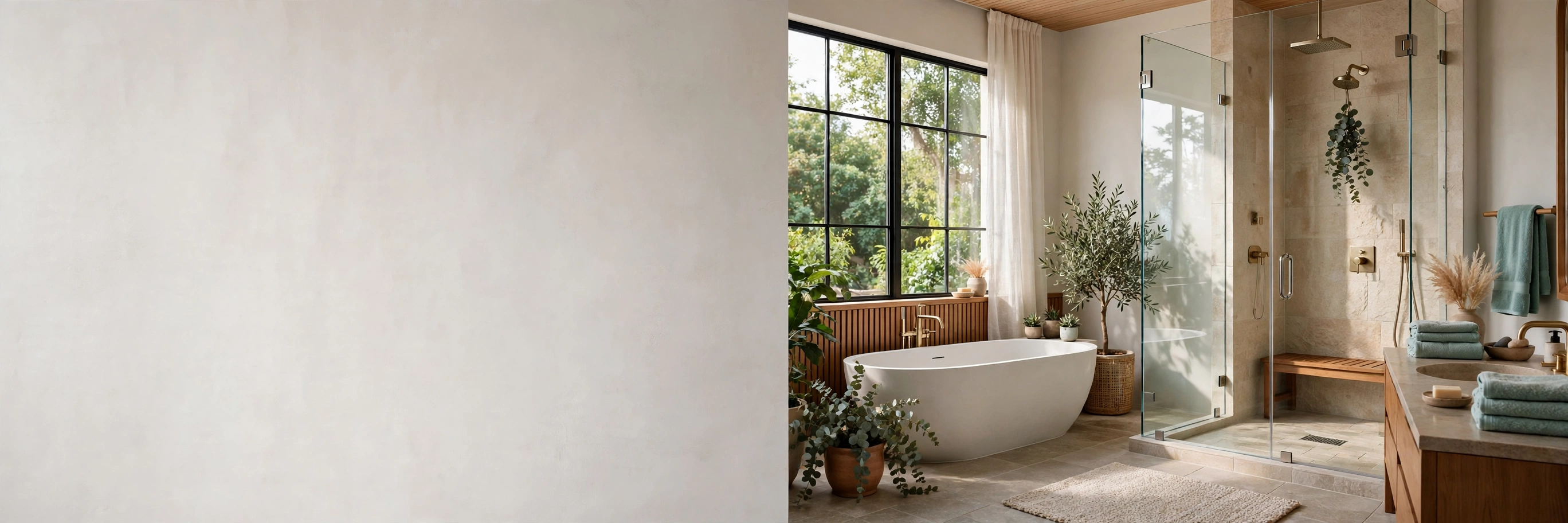
In short: Bathroom remodeling in Catonsville, MD centers on the wet area: tub-to-shower conversions ($8,500–$17,000), shower replacement ($7,500–$15,000), walk-in showers ($9,000–$18,000), and tub replacement ($6,500–$13,000), installed by vetted local specialists.
Streetcar-era plumbing, valley humidity, and freezing winters make the free in-home assessment especially valuable. Pan, valve, drain, ventilation, and subfloor are checked before you sign. Call (833) 334-4470.
Six services, one specialty — the tub and shower. Each links to its full guide with costs and process.
The change Catonsville households ask for most swaps a rarely used tub for a low-entry shower. In a streetcar-era home with one main bath, a quick step-in shower usually wins the day.
For showers worn down by decades of daily use in Catonsville baths: tired grout, stained surrounds, and original valves that no longer hold temperature steady.
For staying in the Catonsville home you already love — a low-entry shower with a bench, anchored grab bars, and seated controls that work for every generation in the house.
Many Catonsville households still want a real tub — for a long soak after a day on the Patapsco trails, or for a home where one full bath must serve children and guests alike.
Some Catonsville homes lost their tub to an earlier shower-only remodel, and now a growing family needs a bath again. Bring the tub back as a proper tub-shower combination.
Whole-room reworks for older Catonsville streetcar-era baths untouched for years, and for postwar ranches whose tub and shower both need renewal at once — one project, one written quote, wet area first.
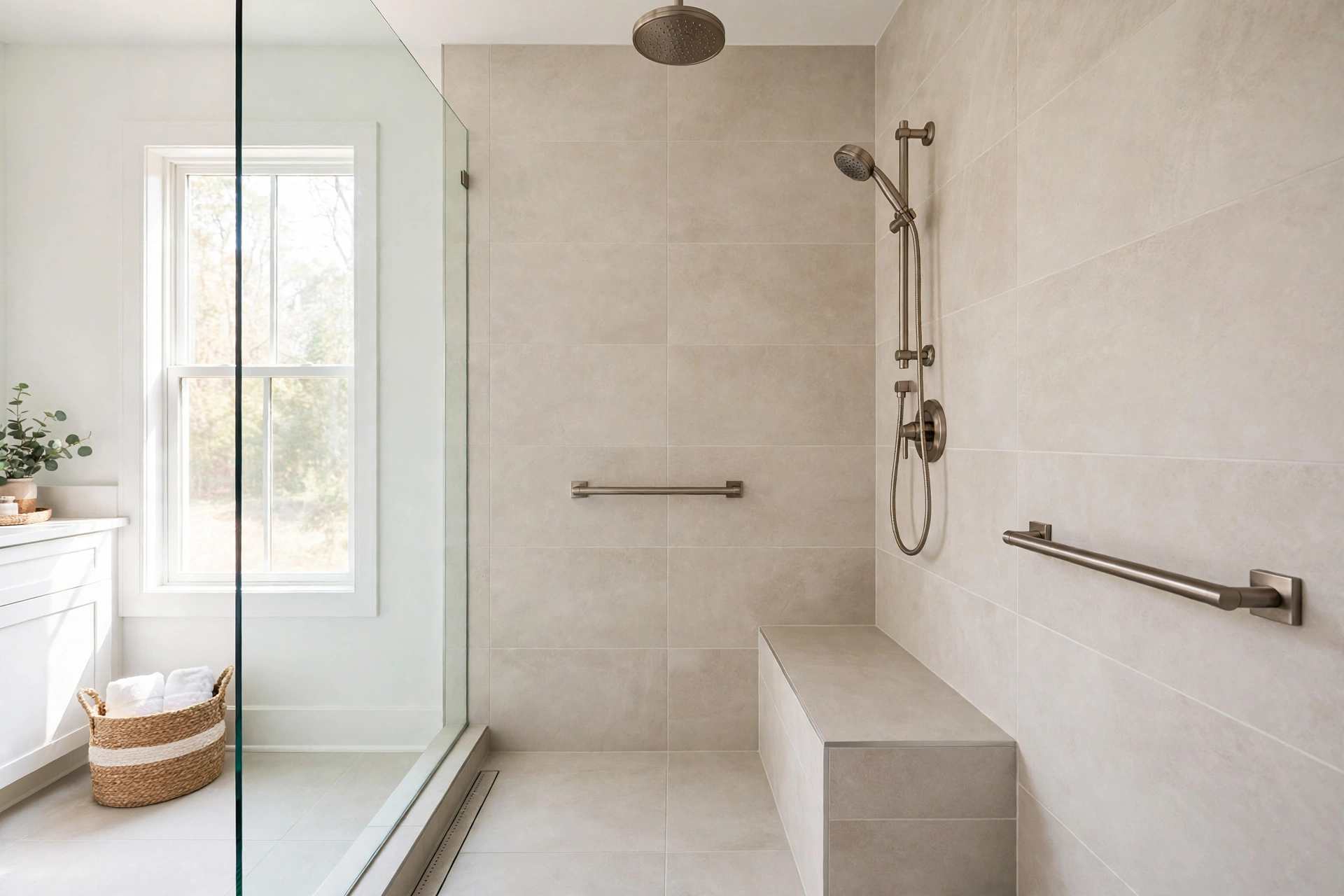
Catonsville sits in the Baltimore contractor corridor, so most jobs land in the middle of the ranges. The spread comes from the house, not the ZIP.
A straightforward tub swap in a postwar ranch is often quick. An older streetcar-era bath with cast-iron drains and original plumbing takes more work, and that work shows in the quote.
The upper half of a range reflects house condition, never a surprise. It is priced in the written quote before work begins. See the 2026 cost guide for methodology.
| Project | Planning range |
|---|---|
| Tub-to-shower conversion | $8,500 – $17,000 |
| Shower replacement | $7,500 – $15,000 |
| Walk-in shower | $9,000 – $18,000 |
| Bathtub replacement | $6,500 – $13,000 |
| Shower-to-tub conversion | $7,500 – $14,000 |
| Full bathroom remodel | $15,000 – $35,000+ |
Planning ranges based on published national installer pricing (2026), for budgeting guidance — not quotes. One piece of Catonsville honesty: the quote you compare should cover the pan, the valve and the drain together.
The cheapest number usually leaves a worn valve or a tired drain behind new walls, and the room below pays for it. Full methodology: the 2026 cost guide.
Catonsville is best understood as a streetcar suburb with three housing stories: Victorian and Craftsman homes from the trolley era, Cape Cods, and postwar ranches in the outer subdivisions.
Streetcar-era Victorians and Craftsman homes hold the oldest Catonsville baths. Their rooms run compact, with cast-iron drains and original valves that often need renewal alongside the finishes.
Cape Cods add steep stairs and upper-level baths tucked under the roofline. Postwar ranches hold more standard baths, built for a growing suburb, so their jobs tend to focus on worn valves and dated surrounds.
Most Catonsville homes run on public water and sewer, with steady pressure across the older streets and the postwar subdivisions alike. Valley air adds humidity, not water supply trouble.
Some outlying lots, especially toward the Patapsco Valley edge, may still use a well or septic system. On those lots, the assessment also checks drain capacity and water pressure before fixtures are picked.
Humidity is the local wrinkle. A bath that stays damp grows musty fast, so a weak exhaust fan often matters more than a tired fixture. The fan, the seals, and the grout get checked together.
Catonsville winters run cold, with freezing nights that test older pipes. A winter job moves indoors and stays warm, with a kept-open second bath mattering most during the coldest stretch.
Summers here run hot and humid, the busiest window for larger jobs. A summer job still plans ventilation first, since a sealed bath stays damp long after a humid day passes.
Life in Catonsville runs along Frederick Road, through the UMBC campus edge, and out to the Patapsco Valley trails. Many residents split their days between main-street errands and Baltimore or Ellicott City work.
A bath that serves that life needs to be easy after a long day and easy for guests. A safe step-in, a bench, and a shower that drains well are the real daily test of the room.
Nothing fancy — just four things that let the specialist price your Catonsville bath correctly on the first visit.
First, know whether the home is a streetcar-era Victorian or Craftsman, a Cape Cod, a brick colonial, or a postwar ranch, and whether the bath sits on a main level or an upper floor.
Second, note any damp, staining, mustiness, or soft spots around the tub or below it, any slow drains, and any temperature swings at the shower valve.
Third, measure the rough footprint and note whether there is a second bath in the home, and whether the home uses public sewer or a septic system.
Fourth, decide which outcome matters most — a safer step-in shower, a deeper tub for children, or a full-room rework — so the written quote prices the right job first.
One more tip: mention cast-iron drains, a well or septic system, or valley humidity at the first call, so fixtures and install-day planning fit real local life.
Our Catonsville coverage centers on Baltimore County and ZIP 21228, with specialists working toward Ellicott City, Arbutus, and Halethorpe — typical directions:
We publish planning ranges on every page. No call for price, no games — you budget before anyone visits.
The price you sign is the price you pay. Quotes are written, itemised and valid beyond the day of the visit — take your time deciding.
Installers are independent local contractors checked for licensing, insurance and wet-area specialisation — including experience with streetcar-era homes, older cast-iron plumbing, and freezing Maryland winters.
The biggest complaint in this industry is the same-day pressure close. Our specialists are instructed the opposite way: measure, explain, quote in writing, and leave the decision to you.
Call (833) 334-4470 or send the assessment form. Tell us the community, the bath, and the home type — that is all the booking needs.
A vetted local specialist measures the room, checks the valves, drain, ventilation and subfloor, and explains the options in plain language. No charge, no obligation.
Most wet-area projects finish in one to three days, with the house left clean and the new shower or tub demonstrated before the crew leaves.
Most wet-area projects in Catonsville follow the planning ranges on this page: tub-to-shower conversions $8,500–$17,000, shower replacements $7,500–$15,000, walk-in showers $9,000–$18,000, tub replacements $6,500–$13,000, shower-to-tub conversions $7,500–$14,000, and full remodels $15,000–$35,000+. Your exact price is confirmed in writing after a free in-home assessment.
Catonsville is a Baltimore County community just west of Baltimore, with about 50,492 people in its service area. It covers ZIP code 21228. Ellicott City, Arbutus, Halethorpe, Woodlawn, Oella, and Gwynn Oak sit nearby.
Many Catonsville baths sit in streetcar-era Victorians, Craftsman homes, and Cape Cods, with cast-iron drains, older valves, and decades of valley humidity behind the walls. A remodel here starts by checking the valve, the drain, the fan, and the subfloor, so new finishes sit on dry, renewed plumbing rather than on tired originals.
Catonsville baths can be remodeled any time of year, since most work happens indoors. Spring and fall offer the most comfortable scheduling windows. Humid summers call for strong ventilation checks, while freezing winters reward a kept-open second bath during the job.
It depends on who uses the bath. A household that still soaks, or one with small children, usually keeps a real tub. A household where the tub sits unused most weeks usually gains more from a low-entry shower. The free assessment weighs daily use, the drain, and the valve before recommending either.
How Being Sauna works (transparency note): Being Sauna is a free homeowner service that connects you with independent, vetted local bathroom remodeling contractors — we do not install bathrooms ourselves.
Our cost figures are planning ranges drawn from published national installer pricing and reviewed for accuracy; see our cost guide methodology. This page was last reviewed in October 2026. Questions: beingsauna@gmail.com or (833) 334-4470.
Free in-home assessment in Catonsville · No pressure · No obligation
Call (833) 334-4470