
Talk to a bath specialistFree · No obligation
(833) 334-4470
Glenford (pronounced GLEN-furd) is a village of about 170 people tucked into the northern foothills of the Appalachians, roughly twelve miles south of Newark and nineteen northeast of Lancaster. Founded in the mid-1800s and agricultural to its bones, it is the kind of tight-knit rural place where the post office, the church and the volunteer fire department are the landmarks that matter. And the ground here is old in a deeper sense than most places: the Flint Ridge State Memorial on Brownsville Road SE — inside the 43739 ZIP — preserves ancient Native American flint quarries, and the hill by the village holds Glenford Fort, a Hopewell-era stone-work enclosure. The housing tells three stories: 1800s homes in the tiny village itself, working farmhouses on the country routes, and post-war ranch homes scattered through the foothills. Outside the village, well water and septic are simply how things are — and foothill wells here can run iron and sulfur, the kind that leaves rusty marks on fixtures and a rotten-egg note on the hot water. The needs are practical: small baths in the old village houses where an unused tub is the obvious candidate for conversion, hard-worked bathrooms in farmhouses with decades-old plumbing, and piecemeal ranch baths that were never planned as a whole. Being Sauna connects Glenford homeowners with vetted local wet-area specialists: honest cost ranges published up front, a free in-home assessment that measures the bathroom, the plumbing and the water you actually have — village house, farmhouse or ranch — and a written quote that never pressures you to sign today.
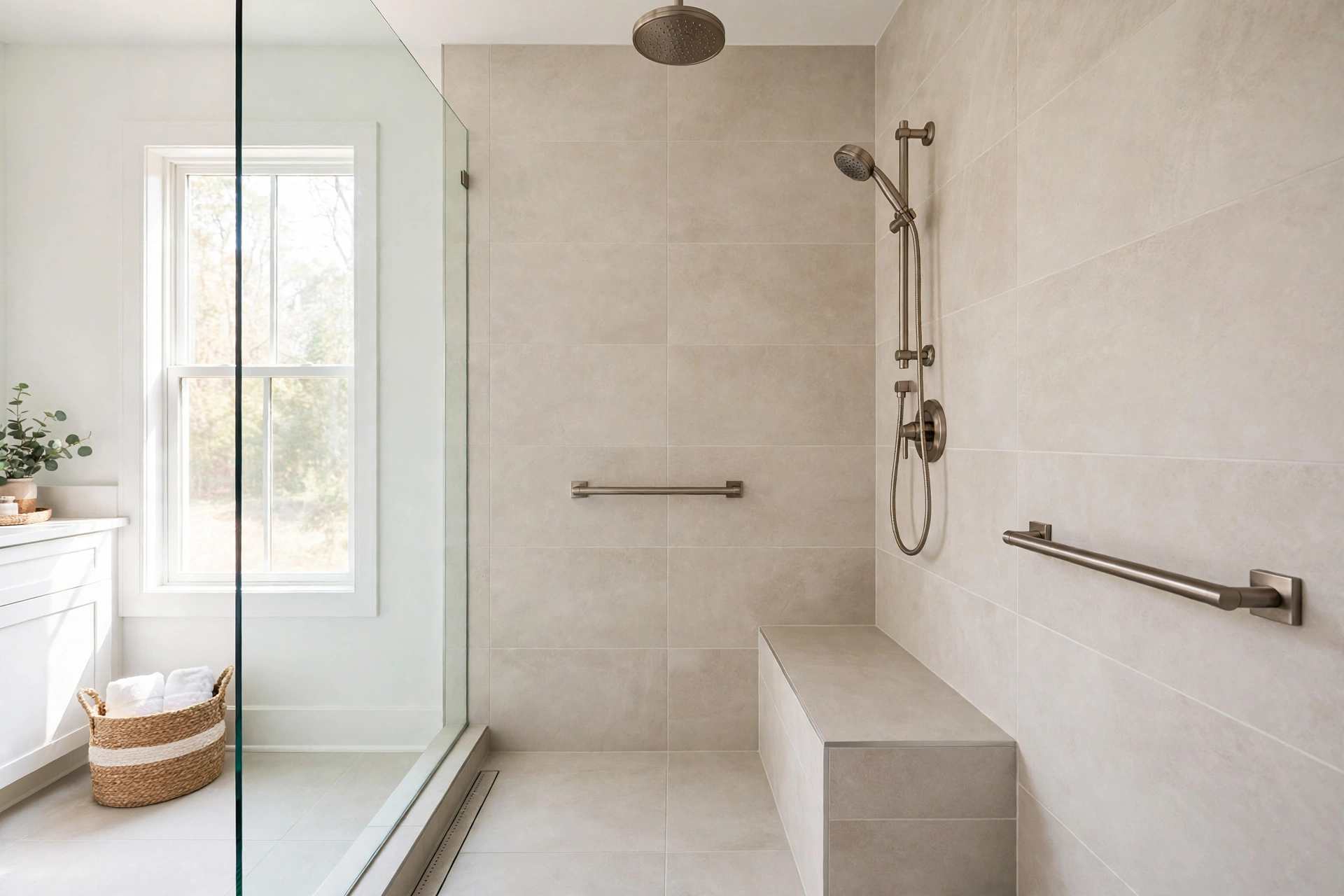
In short: Bathroom remodeling in Glenford, OH (43739) serves the tiny foothills village in Perry County plus the farm routes around it: tub-to-shower conversions ($8,500–$17,000) for 1800s village baths held hostage by unused tubs, shower replacements ($7,500–$15,000) for units dulled by years of iron-marked well water, walk-in showers ($9,000–$18,000) for owners settling in for the long haul, and bathtub replacements ($6,500–$13,000) for growing farmhouse families. Iron staining, sulfur odor and septic-aware fixture planning are part of every rural assessment. Being Sauna offers a free in-home assessment with an exact written quote — call (833) 334-4470.
Six services, one specialty — the tub and shower. Each links to its full guide with costs and process; the ranges below are what Perry County homeowners actually budget against.
The village workhorse: the unused tub out of a Glenford 1800s village bath, a shower measured to the small room the house actually has — the conversion that turns these tiny village baths into rooms that work.
Worn units marked by years of iron-heavy foothill well water swapped for sealed solid-surface showers that shrug off the staining instead of surrendering to it.
Low-step entries with anchored grab bars and hand-helds on slide bars — chosen by Glenford families settling in for the long haul in the homes they know.
Iron-stained and worn-out tubs in village houses and farmhouses replaced with deeper modern tubs and fresh valves — usually finished inside two days.
Bought a shower-only post-war ranch in the foothills and then the family grew? Bring the bath back as a proper tub-shower combo, planned around the home's older plumbing.
Whole-room updates across the village's 1800s homes, the farmhouses and the post-war ranches — one project, one written quote, wet area first.
Forget the television numbers that come with the region-wide franchise ads — big promises and same-day pressure closes. The ranges below are the real ones for the 43739 ZIP. What moves a project inside them is Glenford's three housing layers, and the water all three sit on. The first layer is the village itself: 1800s homes on tiny lots whose baths were added decades after the houses were built — small rooms, waste lines of mixed generations that deserve an honest assessment before a heavier modern shower base goes in. The second layer is the farm routes: working farmhouses with larger rooms but plumbing that has been patched across decades, where the spec has to reckon with what is actually behind the walls. The third layer is the post-war ranch homes scattered through the foothills — generous space, but bathrooms that were refreshed piecemeal since the 1960s and were never planned as a whole. And under everything: the water. Foothill wells outside the village can run iron and sulfur — the rusty marks on fixtures, the rotten-egg note on hot water — so the specification changes to suit the water even when the price band does not: finishes that resist iron marking, fixtures chosen for the well the home actually has, and septic-safe flow rates. The free assessment reads the house, the plumbing and the water before the written quote, never mid-project.
| Project | Planning range |
|---|---|
| Tub-to-shower conversion | $8,500 – $17,000 |
| Shower replacement | $7,500 – $15,000 |
| Walk-in shower | $9,000 – $18,000 |
| Bathtub replacement | $6,500 – $13,000 |
| Shower-to-tub conversion | $7,500 – $14,000 |
| Full bathroom remodeling | $15,000 – $35,000+ |
Planning ranges based on published national installer pricing (2026), for budgeting guidance — not quotes. Glenford's village homes reward careful waste-line assessment, the farmhouses reward an honest look behind patched plumbing, and the foothill ranches reward iron-resistant fixtures and septic-aware planning — so every remodel is planned with the plumbing, water and drainage in mind, not just a cosmetic refresh. Full methodology: the 2026 cost guide.
Glenford is small, agricultural and old in two different ways. The village was founded in the mid-1800s, and its housing still shows it: 1800s homes clustered on tiny lots in the village, working farmhouses along the country routes, and post-war ranch homes tucked through the foothills. The deeper history is written into the ground itself. The Flint Ridge State Memorial sits on Brownsville Road SE inside the 43739 ZIP — ancient Native American flint quarries, some of the oldest worked ground in Ohio — and the hill by the village holds Glenford Fort, a Hopewell-era stone-work enclosure. The northern Appalachian foothills set the tone for everything else: rolling land, well water and septic outside the village, and the area's mineral-heavy wells that can run iron and sulfur. What all of this means for your bathroom: in the village, tiny baths added long after the houses were built, where the unused tub is the obvious candidate for conversion and the waste lines deserve an honest assessment; on the farm routes, larger rooms with plumbing of many generations behind the walls; in the foothill ranches, bathrooms refreshed piecemeal over decades; and everywhere outside the village, finishes and fixtures specified for iron-marked, sulfur-tinged well water and septic-safe flow rates — planned before the price is written, not discovered after.
Our Glenford coverage centres on the 43739 ZIP — the village, Brownsville Road SE past the Flint Ridge country, and the farm routes through the northern Appalachian foothills of Perry County. Specialists travel these roads daily — typical directions:
Specialists here know what 1800s village waste lines look like, what foothill well water does to a finish, and what a septic tank can carry — the planning ranges on this page assume the Glenford reality, not a suburb's.
The written quote you receive in your home stays valid — no expiring-today prices, no call-the-manager theatre. Take the week you need; the number holds.
Installers are independent local contractors vetted for licensing, insurance and wet-area work — including the Glenford specifics: 1800s village plumbing layers, iron-and-sulfur well water, septic-safe flow rates, and small-bath layouts done properly.
The industry's signature move is the same-day pressure close; ours is the opposite. The specialist measures, explains the options, writes the quote, and leaves. That is the whole visit.
Tell a specialist what is going on with your bathroom — an 1800s village bath with an unused tub, a shower dulled by iron-marked well water, a farmhouse retrofit decades overdue. Two minutes, no obligation, no call-centre script.
A local specialist measures the room, checks the plumbing, the foothill well water, the septic context and the subfloor — village house, farmhouse or foothill ranch — and leaves an exact written quote that does not expire on the spot.
Most wet-area projects finish in one to three days; the work area is left clean and the old tub or unit is hauled away.
Glenford wet-area projects follow the published planning ranges: tub-to-shower conversions $8,500–$17,000, shower replacements $7,500–$15,000, walk-in showers $9,000–$18,000, bathtub replacements $6,500–$13,000, shower-to-tub conversions $7,500–$14,000 and full bathroom remodels $15,000–$35,000+, installed. Where a Glenford home lands in those ranges depends on which of the area's three housing layers it sits in. The village itself is 1800s homes on tiny lots — small baths folded into old farmhouse-style floor plans, where a measured tub-to-shower conversion is usually the efficient answer. The farmland routes hold working farmhouses with larger rooms but decades-old plumbing, and the post-war ranch homes scattered through the foothills bring generous space with bathrooms that have been refreshed piecemeal since the 1960s. Under everything sits the water: foothill wells that can run iron and sulfur, which changes fixture specifications even when it does not change the price band. The free assessment reads the house, the plumbing and the water before the written quote, never mid-project.
Honestly: a remodel cannot cure the water itself — sulfur odor and dissolved iron are water-treatment questions, not fixture questions. What a remodel can do is make the bathroom stop losing the battle with the water. Around the 43739 ZIP outside the village, foothill wells carry iron that leaves rusty marks on fixtures and a sulfur character that locals describe as a rotten-egg smell on hot water especially. So specialists plan for that water from the first conversation: finishes and shower surrounds chosen because they shrug off iron marking, fixture selections that do not turn the first streak of rust into a permanent feature, and a frank talk about water conditioning before anything is ordered. The assessment also checks what the well and pressure can genuinely deliver, because a rainfall shower head means nothing on a weak well. Tell the specialist about the smell and the stains when you call — it changes the specification, not through price trickery, and the written quote reflects the water the home actually has.
It is the most common project we see in Glenford village, and small baths are exactly where the conversion pays for itself. The village homes from the 1800s were built when indoor plumbing was decades away, so their bathrooms were added long after — crammed into closets, back porches and lean-tos. An unused tub swallows the only floor space worth having. A measured tub-to-shower conversion trades that dead rectangle for a shower cut to the room: a low step, clear glass, a hand-held on a slide bar. The honest work happens around it: waste lines in these houses can be a patchwork of generations, and the free assessment looks under the old tub before anything is ordered — cast-iron-era tubs in old houses love to hide slow leaks and soft subfloor. The written quote is produced in the house, with the room measured first.
As a practical note, yes — but for the water, not the ancient history. The Flint Ridge State Memorial on Brownsville Road SE holds ancient Native American flint quarries, and Glenford Fort on a nearby hill is a Hopewell-era stone-work enclosure: this is ground that has been worked for thousands of years. The modern relevance is the rock itself. Northern Appalachian foothill geology is what gives Glenford's wells their character — mineral-heavy water that can carry iron and sulfur — and it is why specialists here plan around the well before they plan around the tile. Rock does not change the published planning ranges, but it explains why the free assessment always includes the water the home actually runs on. Knowing the ground is part of knowing the houses.
We serve the whole 43739 ZIP and the country roads around it. Specialists already run this corner of Perry County daily — down Brownsville Road SE past the Flint Ridge country, west toward Somerset and the Hopewell corridor, north along the foothill roads toward Newark about twelve miles away, and southwest toward Lancaster about nineteen miles away, plus the township routes in every direction with the full free in-home assessment and the same published planning ranges as everywhere else we serve. There is no requirement to drive to a showroom; the written quote is produced in your own home — village house, farmhouse or post-war ranch — with no pressure to decide on the spot.
How Being Sauna works (transparency note): Being Sauna is a free homeowner service that connects you with independent, vetted local bathroom remodeling contractors — we do not install bathrooms ourselves. Our cost figures are planning ranges drawn from published national installer pricing and reviewed for accuracy; see our cost guide methodology. This page was last reviewed in October 2026. Questions: beingsauna@gmail.com or (833) 334-4470.
Free in-home assessment in Glenford · No pressure · No obligation
Call (833) 334-4470