
Talk to a bath specialistFree · No obligation
(833) 334-4470
Olmsted Falls is a Cleveland-area city in Cuyahoga County, served by ZIP 44138, with a ZIP-area population of 23,162 people. It sits about fourteen miles southwest of downtown Cleveland, with Berea to the east, North Olmsted to the north and Olmsted Township to the west, and it is one of those rare suburbs that still reads like a small town: a walkable historic center, a river running through it, and a main street where the buildings themselves are the story. The town grew out of Kingston Township, settled from 1814 onward, and took its name from the falls of the Rocky River that powered its early sawmills and gristmills. Sandstone quarries opened in the 1870s and left their mark in blocks that still show up around town, and for much of the twentieth century the greenhouses around Olmsted Falls made it one of the largest glass-growing districts in the country. Two villages — Olmsted Falls and West View — merged in 1971, and the combined city kept the older name. What brings people to this page, though, is quieter than any of that history. It is the tub whose high step has grown harder with every year, the shower whose head has scaled over from hard lake-area water, the grout that damp river-valley air keeps reclaiming within weeks of a deep clean, the valve that no longer holds its temperature when another tap opens. Being Sauna connects Olmsted Falls homeowners with vetted local wet-area specialists: honest cost ranges published up front, a free in-home assessment that measures your bathroom instead of quoting a county average, and a written quote that never pressures you to sign on the day.
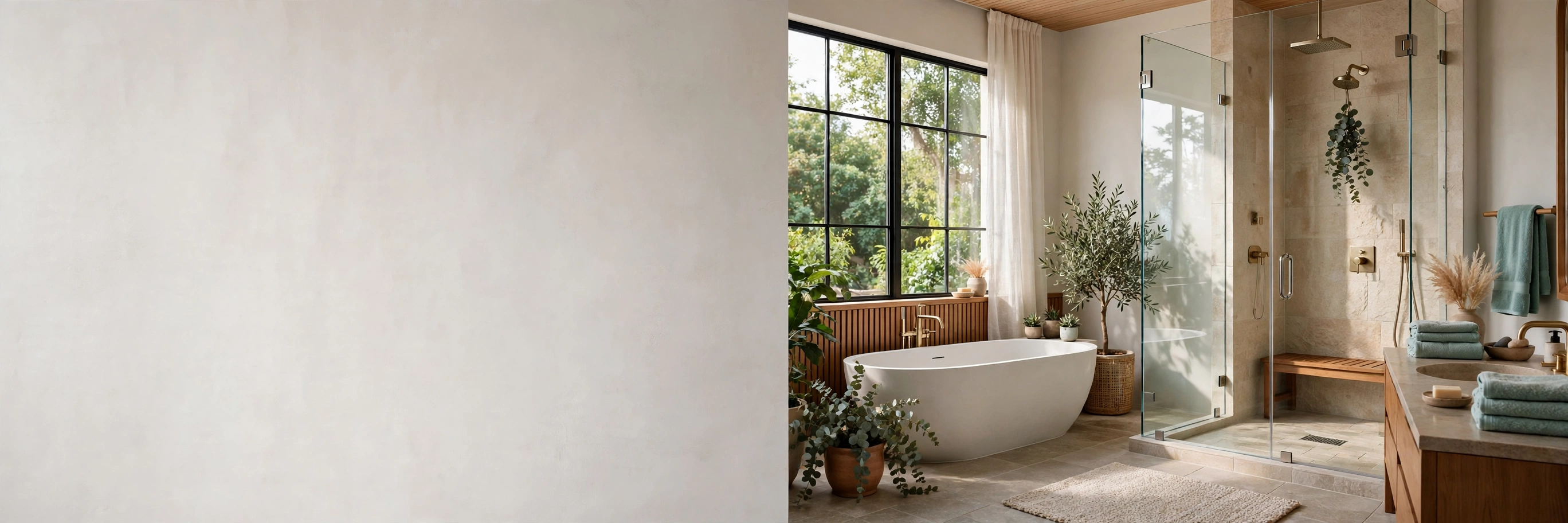
In short: Bathroom remodeling in Olmsted Falls, OH focuses on the wet area: tub-to-shower conversions ($8,500–$17,000), shower replacement ($7,500–$15,000), walk-in showers ($9,000–$18,000) and tub replacement ($6,500–$13,000), installed by vetted local specialists. Olmsted Falls housing — older homes near the historic center and newer subdivisions — plus river-valley dampness, hard lake-area water and lake-effect winters makes the free in-home assessment especially valuable: pan, valve, drain, ventilation and subfloor conditions are checked before you sign anything. Call (833) 334-4470.
Six services, one specialty — the tub and shower. Each links to its full guide with costs and process; the ranges below are what Olmsted Falls homeowners actually budget against. For the full picture across all our bathroom remodeling services, start here, then follow the guide that matches your room.
The change Olmsted Falls households ask for most often starts with a single step: the deep old tub in a home near the historic center, demanding a high climb every morning, or the tired tub in a newer subdivision home whose showerhead has already scaled over from hard water and whose drain has grown slow. Lift it out, fit a low-entry shower into the same footprint, seal the walls properly, renew the pan and valve, and the hardest step in the house disappears. In an older home the drain and the ventilation are examined first, because a bright new shower over a worn drain in a house that already runs damp through a long Northeast Ohio winter is a short-lived improvement — and where hard water has worked on the valves for years, fittings that resist mineral scale are specified as part of the job rather than as an afterthought. For households planning to stay in Olmsted Falls for years, the step-free entry also means the house stays comfortable for visitors of every age.
For showers that have simply run their course: older units in homes near the historic center whose seams have softened through years of damp river-valley air, subdivision showers whose grout keeps darkening back after every wet season, and valves worn by hard water so the temperature shifts whenever another tap opens in the home. Pan, valve and walls are replaced together, so the wear stops at its source instead of being covered over. A shower that has been retiled more than once can hide a tired drain or a soft patch of subfloor, which is why the assessment checks the subfloor, the water supply and the drain before finishes are picked — a point that matters doubly in an older home whose bathroom was fitted into rooms never designed for modern plumbing, and in a home above a damp lower level where a quiet seep may have worked on the floor for years.
Staying in the Olmsted Falls home you have lived in for years, or making a Cleveland-area house work for a steadier daily routine — a low-entry shower with a bench, properly anchored grab bars and controls you can reach while seated, planned around the footprint you already have rather than against it. The blocking for those bars goes into real structure behind the tile, and the drain and valve are renewed with the walls. In an Olmsted Falls home this project pays off in a particular way: many households here are long-time residents planning to age in place in Cuyahoga County, so removing the tub step turns a familiar layout into a genuinely safer one, and the work is scheduled as a proper local appointment so the crew arrives with the right materials for a Northeast Ohio home, not a guess. A step-free shower also means one less icy-morning hazard in a house that already asks enough of its residents in winter.
Plenty of Olmsted Falls families still need a proper tub — for small children, for a long soak after a long day on the road into Cleveland, for a house where the one full bath has to do everything. A deeper modern replacement with fresh plumbing and a sealed surround, usually inside two days, sized for the older bathroom rather than the catalogue page. If the old tub has been seeping quietly for years, the subfloor underneath is inspected and priced honestly before the new tub goes in, so the repair sits inside the quote instead of arriving as a mid-job surprise — a point that matters doubly in an older home whose fittings have lived their whole life in hard water and damp air, and in a home near the river valley where a quiet seep can work on a floor for a whole wet season.
Bought a shower-only house and then the family grew, or the grandchildren started visiting from across Cuyahoga County and the home suddenly needs a bath again? Bring the tub back as a proper tub-shower combination, plumbed and sealed right for a Northeast Ohio home that will hold it for decades, with a surround that stands up to daily family use and hard water. The footprint rarely needs to change; what changes is the plumbing underneath and the waterproofing behind the walls, which is where a conversion either lasts or fails — above all in a home whose original plumbing predates modern standards and whose fittings have spent years in a cold, hard-water climate. In an older home or a subdivision home, a combination unit also keeps the single bathroom flexible for family and guests alike.
Whole-room reworks for the older baths that have never been touched since they were built, and for the Olmsted Falls baths whose tub and shower both need reworking at once — one project, one written quote, wet area first, and the character of the house respected throughout, from the historic center streets to the newer subdivisions. A full remodel is also the right moment to put the unglamorous things right: ventilation that actually clears steam through a long winter, insulation and freeze protection for pipes over unheated spaces, a subfloor that no longer flexes underfoot, and storage that fits a working family bath instead of fighting it. When the whole room is opened up, the hidden work — drain, valve, venting, subfloor — can be renewed in one pass, which is cheaper and cleaner than opening the same walls twice, and it lets an older bathroom keep its proportions and feel while working to a modern standard.
Olmsted Falls draws on the wider Cleveland and Cuyahoga County contractor market — crews working the routes between Berea, North Olmsted, Strongsville, Brook Park, Westlake, Rocky River, Lakewood and Cleveland — so most jobs land in the middle of these ranges. The spread comes from the house, not the ZIP: a straightforward alcove tub swap in a newer subdivision home is a simpler job than an older home near the historic center whose plumbing needs renewal before new work goes in, a home whose valves and showerheads have scaled over from hard water, a bath above a damp lower level whose subfloor needs attention, or a subdivision home whose tighter lot and limited staging space add care to the job. The upper half of a range is a choice or a house condition, never a surprise, because it is priced in the written quote before work begins. For the methodology behind every figure, see the 2026 bathroom remodeling cost guide.
| Project | Planning range |
|---|---|
| Tub-to-shower conversion | $8,500 – $17,000 |
| Shower replacement | $7,500 – $15,000 |
| Walk-in shower | $9,000 – $18,000 |
| Bathtub replacement | $6,500 – $13,000 |
| Shower-to-tub conversion | $7,500 – $14,000 |
| Full bathroom remodel | $15,000 – $35,000+ |
Planning ranges based on published national installer pricing (2026), for budgeting guidance — not quotes. One piece of Olmsted Falls honesty: the quote you compare should cover the pan, the valve and the drain together — the cheapest number usually leaves a scaled valve or a tired drain behind new walls, and the room below pays for it. Full methodology: the 2026 cost guide.
Olmsted Falls is best understood as a river town that became a suburb without losing its center, not as a bedroom community that happens to have old buildings. It sits in Cuyahoga County about fourteen miles southwest of Cleveland, bounded by Berea to the east, North Olmsted to the north and Olmsted Township to the west, and its historic center — Grand Pacific Junction — is a genuine destination in its own right: a cluster of restored Victorian-era buildings along Bagley Road and Columbia Road, anchored by the Grand Pacific Hotel, built around 1840, with an 1860s jail house, an 1875 granary and other nineteenth-century buildings now holding shops, restaurants and services. In the late 1980s and early 1990s, longtime resident Clint Williams bought and restored many of these buildings, and in 2000 a portion of the city, roughly 170 properties, was named a National Register Historic District. Olmsted Falls residents do not drive into Cleveland for a gallon of milk, and they should not have to drive there for a bathroom specialist either. The trades, the suppliers and the crews are already here, working routes that pass through Olmsted Falls every week on their way between Berea, Strongsville, Westlake and Cleveland.
The housing tells the Olmsted Falls story in two layers. The first layer is the older home: houses on the older streets and near the historic center, built when the town grew on mills, quarries and greenhouses, with bathrooms sized for a different era — compact footprints, a tub set tight against the wall, a single vanity — and plumbing runs that have been altered piecemeal over decades. The second layer is the newer subdivision: larger family homes built as the Cleveland suburbs pushed southwest, with more generous primary baths, two-car garages and the tighter lots that come with later development, where the bathroom problem is less often age than wear — fixtures that have served a busy household for years in hard water and damp air. A remodel in an older home is often about plumbing that predates modern standards and a footprint that cannot grow; a remodel in a subdivision home is often about a room that has aged with the house and needs its pan, valve and drain renewed together. Both layers end at the same inspection: pan, valve, drain, ventilation and subfloor, checked before finishes are chosen.
Grand Pacific Junction deserves its own paragraph, because it shapes how Olmsted Falls thinks about old buildings — and old bathrooms. The Junction's buildings were not all built where they stand: the Grand Pacific Hotel itself was moved across the Rocky River to its present site in the late 1850s, and other buildings were moved in from around the area over the years. The lesson for a bathroom remodel is the same one the Junction teaches about restoration generally: an old building is worth keeping, but only if the work underneath is honest. A beautiful shower over a failing drain is a short-lived shower, whatever the neighbourhood, and a restored storefront with rotten structure behind it is a stage set, not a building. When a specialist assesses an older Olmsted Falls home, the same standard applies — the drain, the shut-offs, the condition of the valves and the floor under the tub all get their say before the tile catalogue comes out.
The Rocky River and Plum Creek are the town's defining geography, and they deserve a paragraph of their own. The falls of the west branch of the Rocky River powered the sawmills and gristmills of the 1820s, and the town that first formed at the falls was called Norris Falls in 1843 before being renamed Olmsted Falls in 1845 after the larger falls. Today the river runs through David Fortier River Park, where waterfalls, walking trails, a covered bridge and riverside overlooks draw visitors from across the Cleveland area, and the Rocky River Reservation of the Cleveland Metroparks lies just downstream, with its gorge trails, nature center and the Fort Hill earthworks. For a bathroom, the river valley means one practical thing: ground that holds moisture. Homes near the valley and on lower ground can run damp, basements and lower floors can stay musty through wet seasons, and a bathroom above a damp lower level needs its subfloor and waterproofing checked before new work seals the walls. Damp air also works on the room itself — grout darkens, finishes age early, and a bathroom that cannot clear its own steam will grow problems behind the tile before the season turns.
Sandstone is the other Olmsted Falls signature, and it is worth a paragraph because it explains the town's bones. Quarries in Olmsted Falls and the neighbouring West View operated from the 1870s into the early twentieth century, and sandstone blocks and grindstones left over from those years can still be seen around the city, especially in David Fortier River Park. The same Berea sandstone formation underlies Bradley Woods Reservation in nearby North Olmsted and Westlake, where old quarry sites are still visible. A home built in a quarry town carries that sturdiness in its structure, but sturdiness is not the same as modern plumbing: a solid old house can still hide a drain that has served for decades, shut-offs that no longer close fully, and a subfloor that has flexed under a heavy cast-iron tub for longer than anyone in the house can remember. The assessment in an older Olmsted Falls home therefore looks below the surface first, whatever the walls look like from outside.
Hard lake-area water is the other daily force, and it works on an Olmsted Falls bathroom every single day. Water in the Cleveland area carries minerals that scale showerheads, film fixtures and wear valves year after year: showerheads that clog and lose pressure, valves that wear faster than they would with softer water, a film that returns within days of cleaning, and temperature swings when another tap opens in the home — all of it manageable, none of it ignorable. The assessment looks closely at the condition of existing valves and fittings before new ones are chosen, and fittings that resist mineral scale are specified as part of the job, not as extras added later. Homes on any supply in the Cleveland area deserve the same check: any home whose fixtures have served for decades deserves a valve inspection before new work seals the walls, because the cheapest quote is usually the one that leaves a scaled valve behind.
Lake-effect winters are the other half of the Olmsted Falls equation, and they work on a bathroom every day of the year. Olmsted Falls sits in the lake-effect belt south of Lake Erie, and winter brings deep snow, freeze-thaw cycles and long cold stretches that punish any pipe, wall or subfloor left unprotected — above all a bathroom over an unheated garage, crawl space or porch. So insulation, freeze protection and ventilation are specified for Northeast Ohio winters, not for a mild spring afternoon: pipes protected where they pass through cold spaces, a fan and duct path that actually moves damp air out when the outside air is already cold, and a wall assembly that does not trap moisture behind it. The waterproofing behind the walls and the choice of grout and sealants matter as much as the shower itself.
The seasons shape the work in quieter ways too. An Olmsted Falls winter is long and snowy, with lake-effect bands that can bury a driveway overnight: a bathroom that cannot clear its own steam will grow problems behind the tile before spring, and access for materials and crews must be planned around real snow, not a forecast average. Spring brings the thaw, which is genuinely useful information in a river-valley town: where the water goes in spring tells you where the damp will sit in summer, so spring is a good moment to plan a bathroom above a damp lower level. Summer brings humid air off the lake, so a fan and duct path that actually moves damp air out matters more than it does in a mild spring week. Autumn is often the best window of all, before the first heavy snow, since a bathroom renewed in autumn faces the winter at its best. In a lake-effect Cleveland-area town, that is not caution for its own sake; it is respect for local weather.
Five Olmsted Falls conditions shape every wet-area project. First, the fixed footprint: older baths often cannot grow, while subdivision baths may offer more room than their plumbing can sensibly use, so layout, door swing and storage are planned before tile is chosen, not after. Second, older plumbing: lines that have served for decades in hard water get checked before new work is sealed in, because a beautiful shower over a failing drain is a short-lived shower. Third, river-valley dampness and hard water: damp lower levels and mineral scale stain and wear fittings, and lake-effect cold punishes any pipe or wall left unprotected, so moisture checks, resistant fittings, insulation and a real ventilation plan are specified as part of the job. Fourth, the two housing layers: an older home near the historic center and a subdivision home ask different questions at assessment, and the quote should reflect which layer your home belongs to. Fifth, the Cleveland-area service role: Olmsted Falls sits on the southwest Cuyahoga County routes, so a specialist who already works the runs to Berea, Strongsville, Westlake and Cleveland should not have to discover the house's facts on arrival — and a crew that has come to a Cleveland-area town should arrive knowing its winters.
There is one more Olmsted Falls habit worth naming, because it decides more remodels than any catalogue ever will: the habit of living with a bathroom that almost works. The tub that takes a careful step, the shower that runs hot then cold, the grout that gets scrubbed back into shape twice a year, the scale that gets cleaned off the showerhead every weekend — in a comfortable Cleveland-area town where the Junction shops, the river park and the run into Cleveland all seem more urgent than a bathroom, these are easy to normalise, because the room still functions and the town is always more interesting than a valve. The honest test is simpler than the habit. If the step into the tub is the hardest step in the house, if the valve no longer holds its temperature, if the subfloor flexes or the wall below the bath shows a stain, then the room is not asking for another cosmetic round; it is asking for its pan, valve and drain to be renewed together, once, properly. That is the whole Olmsted Falls approach in a sentence: measure first, renew the hidden parts with the visible ones, and leave a room that the next twenty years of Cuyahoga County life can rely on without a second thought.
Nothing fancy — just four things that let the specialist price your Olmsted Falls bath correctly on the first visit. First, know whether the home is an older home near the historic center or a newer subdivision home, and whether the walls are plaster, drywall or another older construction, since the drain check and the materials plan both start there, and an older bathroom needs its plumbing runs understood before install day. Second, note any damp, staining or soft spots around the tub or below it, any mustiness that lingers after a shower, any scale, staining or corrosion on fixtures, and any history of slow drains or temperature swings in the shower — in an older Cleveland-area home, these clues point to plumbing and waterproofing needs behind walls that have been tiled over more than once, not just cosmetic wear. Third, measure the rough footprint of the bath and note whether the room sits over a lower floor, an unheated space or a slab, whether the home sits near the river valley or on lower ground, and whether the home is a year-round residence, since a heavy old tub often hides subfloor wear that only shows once it is lifted out, and a river-valley home needs finishes that hold up to damp air. Fourth, decide which outcome matters most — a safer step-in shower, a deeper tub for the kids, or a full-room rework — so the written quote prices the right job first and the rest as separate options, never as a bundle you did not ask for.
One more Olmsted Falls-specific tip: if your home sits near the river valley, has a damp basement, or sits near Grand Pacific Junction or the Rocky River, say so at the first call, because it changes how the work is planned — and it matters doubly when the crew is planning ventilation details, freeze protection and work hours for an older or subdivision home. An Olmsted Falls bath cannot simply lose its shower for three days without a plan, and a good specialist will sequence the work — and, where possible, keep a wash-up option available — so the household routine survives the rebuild. Mention the house age, the ground and damp history, any second bath in the home, and whether the house is an older home or a subdivision home, and the schedule will be built around real life rather than around the crew's convenience.
Our Olmsted Falls coverage centers on Cuyahoga County and ZIP 44138, with specialists working the Cleveland-area routes between Berea, North Olmsted, Strongsville, Brook Park, Westlake, Rocky River, Lakewood, Cleveland, Independence, Bedford, Maple Heights, Solon, Brecksville and Broadview Heights — typical directions:
Coverage centers on Olmsted Falls and the 44138 ZIP in Cuyahoga County, with specialists working the Cleveland-area routes to Cleveland, Lakewood, Beachwood, Euclid, Independence, Strongsville, Maple Heights, Solon, Bay Village, Westlake, Bedford, Broadview Heights, Rocky River, Brookpark and Brecksville.
We are the only bath service in this niche that publishes planning ranges on every page. No “call for price”, no games — you budget before anyone visits.
The price you sign is the price you pay. Quotes are written, itemised and valid beyond the day of the visit — take your time deciding.
Installers are independent local contractors checked for licensing, insurance and wet-area specialisation before they take a single Being Sauna job — including experience with older homes near historic centers, newer subdivision layouts, river-valley dampness, hard lake-area water, lake-effect winters and tighter subdivision-lot access.
The biggest complaint in this industry is the same-day pressure close. Our specialists are instructed the opposite way: measure, explain, quote in writing, and leave the decision to you.
Call (833) 334-4470 or send the assessment form. Tell us the town, the bath, and whether the home is an older home or a subdivision home — that is all the booking needs.
A vetted local specialist measures the room, checks the valves, drain, ventilation and subfloor, and explains the options in plain language. No charge, no obligation.
Most wet-area projects finish in one to three days, with the house left clean and the new shower or tub demonstrated before the crew leaves.
Most wet-area projects in Olmsted Falls follow the planning ranges published on this page: tub-to-shower conversions $8,500-$17,000, shower replacements $7,500-$15,000, walk-in showers $9,000-$18,000, bathtub replacements $6,500-$13,000, shower-to-tub conversions $7,500-$14,000 and full bathroom remodels $15,000-$35,000+. Most Olmsted Falls jobs land in the middle of those ranges. The upper half applies where the house itself asks for more work: an older home near the historic center whose plumbing should be renewed before new fixtures go in, a home whose bathroom sits over a basement or crawl space that needs attention first, a bathroom in a house with hard Lake Erie-area water that has scaled showerheads and worn valves for years, or a newer subdivision home on a tighter lot where staging and access add care to the job. Your exact price is confirmed in writing after a free in-home assessment.
A specialist comes to you. Olmsted Falls is a Cuyahoga County city in the Cleveland area, served by ZIP 44138, and it sits on the regular service routes that run between Berea, North Olmsted, Strongsville, Brook Park, Westlake, Rocky River, Lakewood, Cleveland, Independence, Bedford, Maple Heights, Solon, Brecksville and Broadview Heights, so an Olmsted Falls visit is a normal scheduled call rather than a special trip. Tell us at the first call that the home is in Olmsted Falls, in ZIP 44138, and the visit is booked as a proper local appointment, with materials and crew time planned for a Cleveland-area home rather than squeezed between nearer jobs. The assessment itself is the same as anywhere else: measured, explained and quoted in writing, with no obligation.
Start with the house and its generation, and let the finishes follow. Homes near the Olmsted Falls historic center and along the older streets carry the town's sandstone and mill history in their bones: smaller, older bathrooms, plumbing runs that have been altered piecemeal over decades, and walls that may hide more than one generation of tile. Newer Olmsted Falls subdivisions tell a different story: larger primary baths, more generous layouts, and fixtures that are newer but already showing the wear of hard water and damp air after years of family use. In either kind of home, the drain, the venting and the shut-offs deserve inspection before new tile seals them in, because a bright new shower over a worn drain in a house that already runs damp through a long Northeast Ohio winter is a short-lived improvement. A heavy old tub can also hide soft spots in the subfloor, and years of hard water may have worked on fittings that look fine from the outside. Layout matters too: an older bathroom often cannot grow, while a subdivision bath may offer more room than its plumbing can sensibly use, so door swing, storage and the position of the controls are settled before tile is chosen, not after. The written quote prices the hidden work and the house logistics honestly instead of leaving either to be discovered mid-job.
Water, in all its forms, is the force every Olmsted Falls bathroom lives with. The town grew up around the falls of the Rocky River and Plum Creek, and the river valley still shapes the ground: homes near the valley and on lower ground can run damp, and a bathroom above a damp lower level needs its subfloor, waterproofing and ventilation checked before finishes are picked. Hard Lake Erie-area water is the other daily force: it scales showerheads, films fixtures and wears valves year after year, so temperature swings when another tap opens and a showerhead that loses pressure are common Olmsted Falls complaints rather than mysteries. Northeast Ohio winters complete the picture: freeze-thaw cycles and long cold stretches punish any pipe, wall or subfloor left unprotected, above all a bathroom over an unheated garage, crawl space or porch. The assessment therefore looks closely at the condition of existing valves and supply lines, the subfloor under the tub, the ventilation that must clear steam without trapping moisture in cold walls, and the insulation and freeze protection around pipes that face lake-effect winters. A bathroom sealed, ventilated and fitted for Cleveland-area water stays clean and sound far longer than one built to a mild-climate standard.
Any time of year works, but the planning differs by season, so tell the specialist your timing at the first call. Winter installs are planned around lake-effect cold: materials and install dates are sequenced so no project is left half-finished when a Northeast Ohio storm threatens, and any work that opens walls is planned with freeze protection in mind. Spring is a practical window too, once the thaw has shown where damp ground and low-lying lots actually send their water, which is useful information before a bathroom above a damp lower level is sealed up. Summer brings humid air off the lake, so a fan and duct path that actually moves damp air out matters more than it does in a mild spring week, and the long days make scheduling straightforward. Autumn is a good window as well, before the first heavy lake-effect snow, since a bathroom renewed before winter faces the cold season at its best. Whatever the season, the written quote holds while you decide, so there is no pressure to start before you are ready.
How Being Sauna works (transparency note): Being Sauna is a free homeowner service that connects you with independent, vetted local bathroom remodeling contractors — we do not install bathrooms ourselves. Our cost figures are planning ranges drawn from published national installer pricing and reviewed for accuracy; see our cost guide methodology. This page was last reviewed in October 2026. Questions: beingsauna@gmail.com or (833) 334-4470.
Free in-home assessment in Olmsted Falls · No pressure · No obligation
Call (833) 334-4470