
Talk to a bath specialistFree · No obligation
(833) 334-4470
Auburn is a Green River valley city in King County, south of Seattle, with about 125,193 people in its service area.
The city grew from a railroad and farming town into a valley manufacturing and warehouse hub, and its downtown still carries that working history.
The White River Valley Museum and the Mary Olson Farm keep Auburn's early farming and railroad days close at hand.
Long wet winters, valley damp, and moss season shape how an Auburn bathroom should be built — especially waterproofing, ventilation, and sealing that holds through months of rain.
Being Sauna connects Auburn homeowners with vetted local wet-area specialists: honest planning ranges up front, a free in-home assessment, and a written quote with no pressure to sign on the day.

In short: Bathroom remodeling in Auburn, WA centers on the wet area: tub-to-shower conversions ($8,500–$17,000), shower replacement ($7,500–$15,000), walk-in showers ($9,000–$18,000), and tub replacement ($6,500–$13,000), installed by vetted local specialists.
Wet winters, valley damp, and older railroad-era baths make the free in-home assessment especially valuable: pan, valve, drain, ventilation, and subfloor are checked before you sign. Call (833) 334-4470.
Six services, one specialty — the tub and shower. Each links to its full guide with costs and process.
The change Auburn households ask for most swaps a rarely used tub for a low-entry shower. After a long commute up the valley, a quick rinse usually beats a soak.
For showers worn down by years of valley damp in Auburn baths: tired grout, stained surrounds, and valves that no longer hold temperature steady.
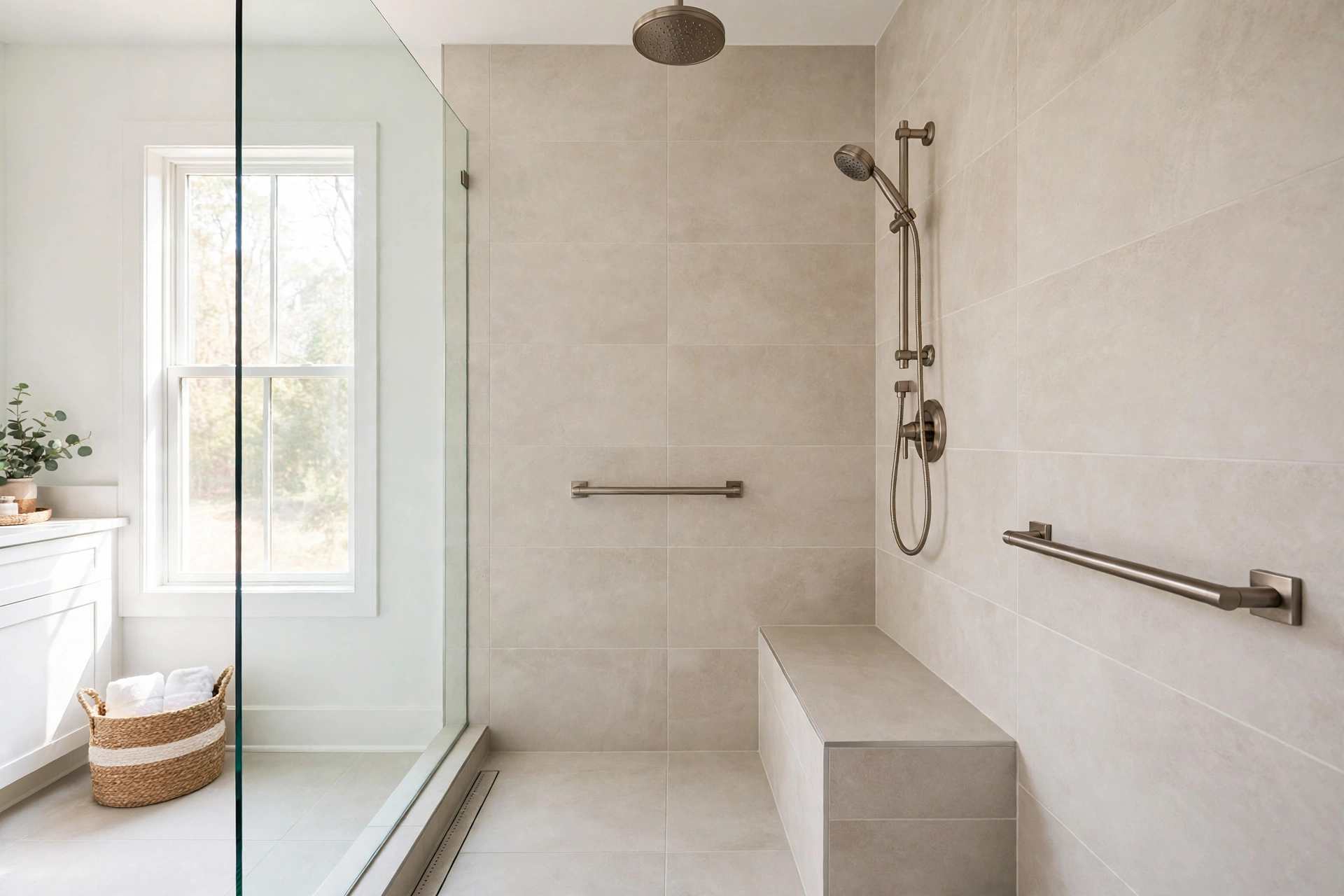
For staying in the Auburn home you already love — a low-entry shower with a bench, anchored grab bars, and seated controls that work for every generation in the house.
Many Auburn households still want a real tub — for a long soak on a gray winter evening, or for a home where one full bath must serve everyone.
Bought a shower-only rambler and now visiting family stays over, so the house suddenly needs a bath again? Bring the tub back as a proper tub-shower combination.
Whole-room reworks for baths untouched for decades, and for downtown homes and Lea Hill houses whose tub and shower both need renewal at once — one project, one written quote, wet area first.
Auburn draws on a busy Puget Sound contractor market, so most jobs land mid-range. The spread comes from the house, not the ZIP.
A straightforward rambler tub swap is simpler than an older downtown home needing original plumbing renewed first, or a valley-floor bath with damp issues to untangle.
The upper half of a range reflects house condition, never a surprise, because it is priced in the written quote before work begins. See the 2026 cost guide for methodology.
| Project | Planning range |
|---|---|
| Tub-to-shower conversion | $8,500 – $17,000 |
| Shower replacement | $7,500 – $15,000 |
| Walk-in shower | $9,000 – $18,000 |
| Bathtub replacement | $6,500 – $13,000 |
| Shower-to-tub conversion | $7,500 – $14,000 |
| Full bathroom remodel | $15,000 – $35,000+ |
Planning ranges based on published national installer pricing (2026), for budgeting guidance — not quotes. One piece of Auburn honesty: the quote you compare should cover the pan, the valve and the drain together.
The cheapest number usually leaves a worn valve or a tired drain behind new walls, and the room below pays for it. Full methodology: the 2026 cost guide.
Auburn is best understood as a valley city with two eras of housing: railroad-era homes near downtown and ramblers and split-levels on Lea Hill and in Lakeland Hills. Valley damp touches every one of them.
Railroad-era homes near downtown hold older baths with cast-iron tubs, layered tile, and original valves. Their remodels start with the hidden parts, not the finishes.
Lea Hill and Lakeland Hills homes hold ramblers and split-levels with baths from later decades. Those baths often need valves and drains renewed together before new finishes go in.
Most Auburn homes run on municipal water and sewer, with steady pressure and treated water. That covers downtown and most subdivisions without extra upkeep.
Outlying valley lots may still use a well or septic system. On those lots, the assessment also checks drain capacity and water pressure before fixtures are picked.
Auburn winters bring long rain, so a winter job needs a usable bath kept open and a crew that works clean in wet weather. Planning ahead keeps the household comfortable throughout.
Late spring through early fall offers the driest install windows, with rooms airing out easily between steps. Summer dates still need a firm written quote before work begins.
Auburn's railroad yards and the Green River valley draw workers and visitors year-round, and many Auburn homes host guests often because of it.
A guest-ready bath with a low-entry shower earns its keep fast in a house like that. A safe step-in, a bench, and a shower that drains well are the real daily test of the room.
Nothing fancy — just four things that let the specialist price your Auburn bath correctly on the first visit.
First, know whether the home is a railroad-era downtown house, a valley rambler, or a Lea Hill subdivision home, and whether the bath sits on a main level, an upper floor, or at ground level.
Second, note any damp, staining, mildew, or soft spots around the tub or below it, any mustiness after a shower, and any slow drains or temperature swings.
Third, measure the rough footprint and note whether the room sits over a lower level or a slab, and whether there is a second bath in the home.
Fourth, decide which outcome matters most — a safer step-in shower, a deeper tub for visiting family, or a full-room rework — so the written quote prices the right job first.
One more tip: mention valley damp, an older downtown bath, a well or septic system, or hillside access at the first call, so fixtures and install-day planning fit real local life.
Our Auburn coverage centers on King County and ZIPs 98001, 98002 and 98092, with specialists working toward Kent, Federal Way, and Puyallup — typical directions:
We publish planning ranges on every page. No “call for price”, no games — you budget before anyone visits.
The price you sign is the price you pay. Quotes are written, itemised and valid beyond the day of the visit — take your time deciding.
Installers are independent local contractors checked for licensing, insurance and wet-area specialisation — including experience with wet winters, valley damp, and older railroad-era baths.
The biggest complaint in this industry is the same-day pressure close. Our specialists are instructed the opposite way: measure, explain, quote in writing, and leave the decision to you.
Call (833) 334-4470 or send the assessment form. Tell us the community, the bath, and the home type — that is all the booking needs.
A vetted local specialist measures the room, checks the valves, drain, ventilation and subfloor, and explains the options in plain language. No charge, no obligation.
Most wet-area projects finish in one to three days, with the house left clean and the new shower or tub demonstrated before the crew leaves.
Most wet-area projects in Auburn follow the planning ranges on this page: tub-to-shower conversions $8,500–$17,000, shower replacements $7,500–$15,000, walk-in showers $9,000–$18,000, tub replacements $6,500–$13,000, shower-to-tub conversions $7,500–$14,000, and full remodels $15,000–$35,000+. Your exact price is confirmed in writing after a free in-home assessment.
Auburn is a city in King County in Washington, in the Green River valley south of Seattle, with about 125,193 people in its service area. It covers ZIP codes 98001, 98002, and 98092. Kent, Federal Way, Puyallup, Sumner, and Covington sit nearby.
Auburn's railroad-era homes near downtown hold older baths with cast-iron tubs, layered tile, and original valves, while Lea Hill and Lakeland Hills subdivisions hold ramblers and split-levels from later decades. Older baths may hide worn valves and drains behind the walls. The assessment checks the pan, valve, drain, ventilation, and subfloor before finishes are picked.
Auburn's long wet winters and valley damp test grout, sealing, and ventilation in every bath, and moss season keeps moisture on roofs and around the house. A remodel here should pair new fixtures with tight waterproofing and a fan that truly clears the room after a shower. Ventilation matters most in baths with no window and in older valley homes.
Auburn bathrooms can be remodeled any time of year, since most work happens indoors. Late spring through early fall offers the driest scheduling windows, with rooms airing out easily between steps. Book early if the project must finish before guests arrive or a home goes on the market, and allow extra care around winter rain scheduling.
How Being Sauna works (transparency note): Being Sauna is a free homeowner service that connects you with independent, vetted local bathroom remodeling contractors — we do not install bathrooms ourselves.
Our cost figures are planning ranges drawn from published national installer pricing and reviewed for accuracy; see our cost guide methodology. This page was last reviewed in October 2026. Questions: beingsauna@gmail.com or (833) 334-4470.
Free in-home assessment in Auburn · No pressure · No obligation
Call (833) 334-4470